

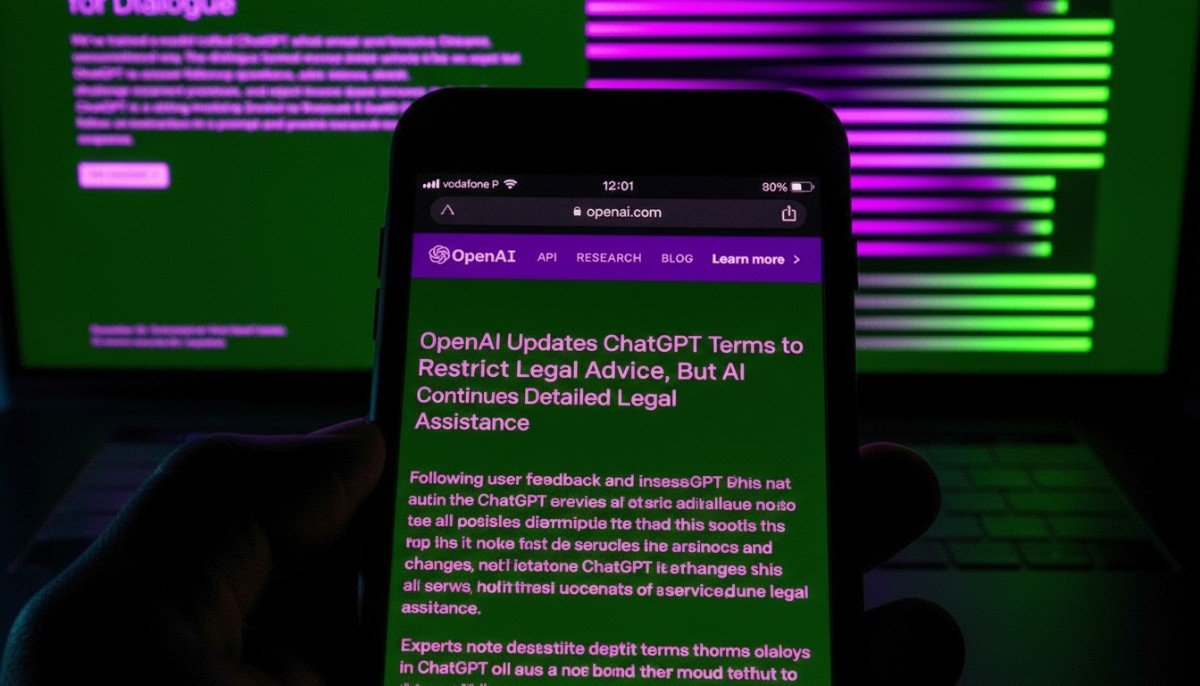
OpenAI's recent terms of service update declaring it will not provide legal advice appears largely symbolic, as the company's ChatGPT system continues offering detailed legal assistance including contract drafting and clause recommendations.
On 29 October, the San Francisco-based artificial intelligence company updated its usage terms stating: "We don't allow our services to be used to interfere with the ability to access critical services, including any use case for automation of high-stakes decisions in sensitive areas without human review: legal, medical, essential government services."
The updated terms also specified: "You cannot use our services for provision of tailored advice that requires a licence, such as legal or medical advice, without appropriate involvement by a licensed professional."
Initial reactions amongst legal professionals suggested the changes would curtail ChatGPT's legal capabilities. However, testing reveals the system continues providing substantial legal assistance whilst disclaiming it constitutes formal legal advice.
When asked how to hire a new employee under English law, the system explained relevant legal areas in detail. It subsequently drafted an employment contract incorporating specified variables, then created a specialised retirement transition clause with line-by-line explanations of appropriate wording.
Only when explicitly thanked for "legal advice" did the system clarify that it was providing "general legal information and example drafting guidance" rather than formal legal advice under UK law.
The disclaimer stated: "I can help you explain how the law works, show compliant wording, and generate practical document templates—but for formal legal advice (i.e. tailored to your specific facts or enforceability under contract law), you'd need to have it reviewed or signed off by a qualified solicitor."
The system then offered to generate a complete employment contract draft including the retirement transition clause—behaviour difficult to distinguish from legal drafting services.
ChatGPT has long included such disclaimers when pressed for legal advice whilst simultaneously providing extensive legal assistance. The terms update appears to formalise existing practice rather than fundamentally alter system behaviour.
Other legal tasks remain fully accessible, including comparing non-disclosure agreements, reviewing documents, summarising legislation and finding relevant case law—activities that collectively constitute substantial portions of junior lawyers' work.
The situation highlights regulatory ambiguity surrounding what constitutes "legal advice" versus "legal information." Whilst jurisdictions generally restrict legal advice to licensed professionals, distinguishing between advice and information proves challenging when AI systems draft contracts and recommend specific clause wording.
For OpenAI, the terms update may provide legal protection by establishing that users deploying ChatGPT for legal purposes do so against stated policy. Whether this shields the company from liability if users rely on flawed legal guidance remains legally uncertain.
The practical reality is that thousands of individuals—including practising lawyers—continue using ChatGPT for legal work including research, drafting and analysis. The terms update is unlikely to meaningfully alter this behaviour.
Law firms themselves increasingly deploy large language models for various tasks, often with additional safeguards including human review. Though there are issues of accuracy and professional responsibility, the technology with its rapid analysis of documents and creation of drafts provides efficiency gains that are hard to ignore.
Critics say such AI-generated legal work, without qualified oversight, can put people at risk by failing to recognize limitations or mistakes in output.
Critics argue that AI-generated legal work without qualified oversight poses risks to individuals who may not recognise limitations or errors in output. Supporters counter that democratising legal information benefits those unable to afford professional services, provided users understand they're receiving guidance rather than professional advice.
The distinction OpenAI draws—explaining law and providing templates versus offering tailored advice—mirrors arguments legal information providers have long made. Whether this distinction holds regulatory or legal weight varies by jurisdiction.
What remains clear is that despite OpenAI's stated prohibition on legal advice provision, ChatGPT continues performing substantial legal work that many would consider well within lawyers' traditional domain. The gap between policy and practice suggests either the policy is ineffective or the distinction between prohibited "advice" and permitted "information" lacks meaningful substance.