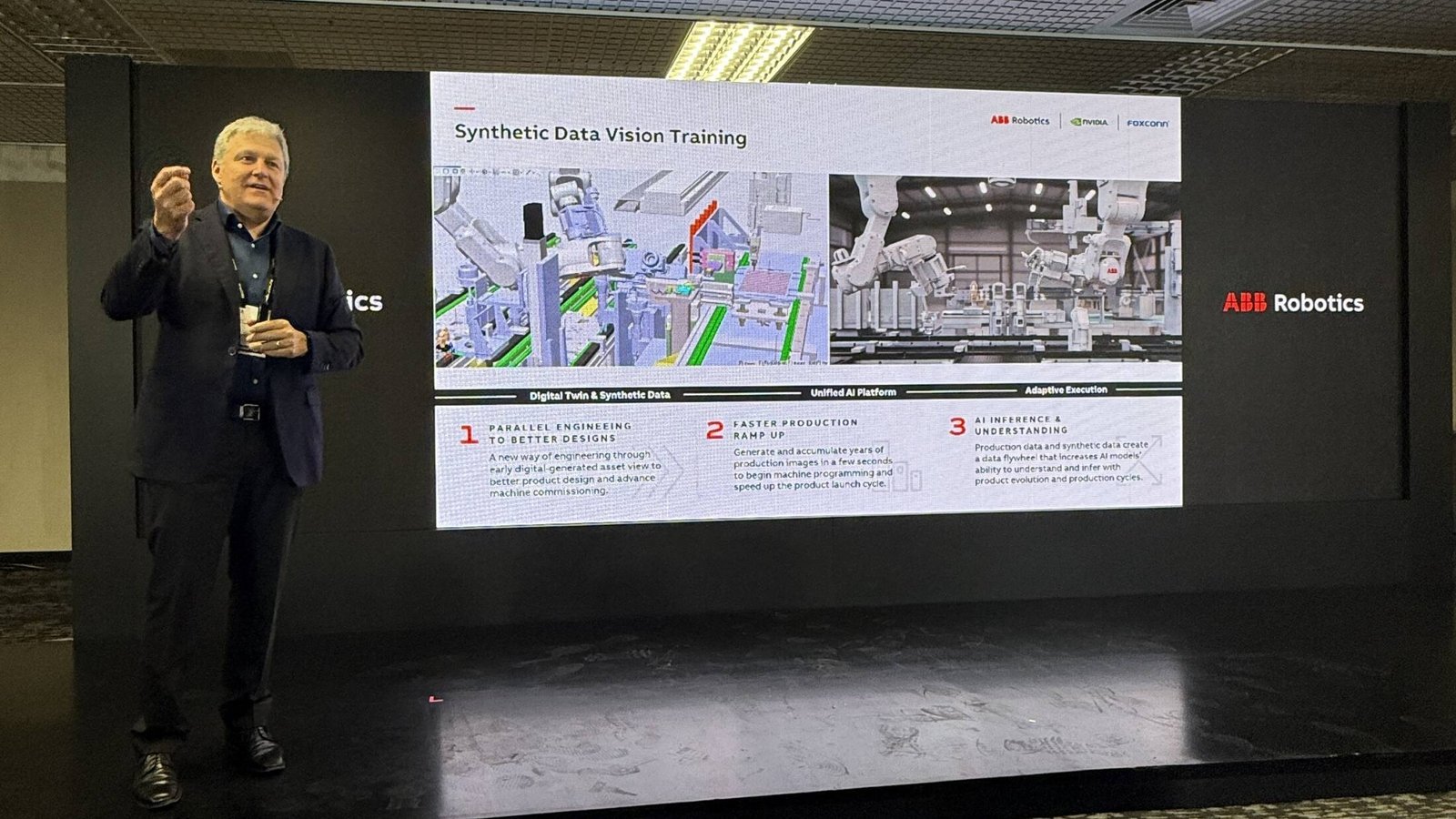


JD.com has delivered something massive in AI-powered retail during China's Singles' Day, 2025. The orders have jumped to 60%, and with a surprising challenge, 95% of the orders were delivered within 24 hours of the timeframe. AI tablets got sold quickly, with actual sales up 200%. Meanwhile, AI-driven logistics achieved near-instant delivery in major Chinese cities with the help of their in-house robots.
The obvious question arises: can India do the same?
Where India stands right now
Indian retailers are still in the early stages of their AI journey. While many are experimenting, the truth is we’re just getting started. Industry leaders like Reliance Digital, Croma, and Flipkart are beginning to use AI for inventory management, customer support, and product recommendation. However, the scale is nowhere compared to China. Eventually, we will be there if we use automation the correct way.
The numbers tell the story. Only 23% of Indian retailersaccording to CPA Australia report have adopted any form of AI technology, mostly basic chatbots and recommendation engines. And what about Generative AI adoption? Just 8%(estimated), and that's mainly among the larger chains.
This gap is massive. But it's also an opportunity for us to scale up.
What makes AI truly important
AI can do far more than automate the basic tasks. Predictive modeling can inspect demand across India's incredibly diverse regions. Computer vision can transform warehouse inventory tracking significantly easier. Machine learning can refine prices in real time based on local market conditions and seasonal changes, or maybe even sales like big billion days, and festival days.
India's retail market is already worth over $1 trillion. Getting AI work right could completely reshape how 1.4 billion people shop.
India's unique challenges
So, here's the thing: India can't just copy what China did. Our market is fundamentally different.
India’s diversity is incredible — 22 official languages, hundreds of dialects, and completely different tastes from state to state. An AI model that works great in Mumbai might fall flat in Kerala, Chennai, or Bihar.
Payment preferences vary wildly, like UPI and credit cards. Cash still dominates in many regions despite UPI's growth. AI systems need to handle everything from digital wallets to cash on delivery, along with all the risks and logistics and operational headaches that come with each one of those.
Infrastructure quality fluctuates greatly between tier 1 cities and rural areas. AI models need to adapt delivery predictions in a continuous process and inventory management accordingly.
Then, there are cultural nuances. Festival seasons vary by region. Dietary preferences differ drastically. Shopping patterns change are based on local customs. Product demand during Onam in Kerala looks very different from what customers want during Durga Puja in West Bengal.
AI systems do need training on all these difficult patterns to provide meaningful personalization. That's a lot more complex than what Chinese retailers face.
The returns nightmare
Indian retail has a particularly stubborn challenge, which is product returns. Return rates of ten percent exceed 30% in online fashion retail, absolutely crushing profitability. In online fashion, return rates can sometimes exceed 30%(estimated), which is severely hurting profitability.
AI offers a way out.
Smart algorithms can study past returns, customer reviews, and product details to predict whether something will be sent back — even before a shopper hits “buy.” Virtual try-on tools help people choose better, particularly when it comes to fashion and accessories. Meanwhile, size recommendation engines trained on millions of data points can significantly cut down on size-related returns.
JD.com' success in reducing returns through AI-driven quality checks and customer preference matching offers a valuable roadmap. Indian retailers implementing similar systems could potentially cut down return rates by 40% - 50%, leading to significant cost savings and happier customers.
What needs to happen
Building AI isn’t cheap or easy. Indian retailers need strong systems for collecting data, access to cloud computing, and talented people who can create and manage AI models.
Here’s the upside: India’s IT sector is strong, so talent is available. The downside? True AI expertise is still hard to come by.
Collaborations have the potential to ease the path. Firms such as Fractal Analytics, Manthan, and Vue.ai are at present working with retailers from India to create AI solutions that are customized to the local market. These partnerships not only work around initial barriers and offer the necessary specialized knowledge.
Implementing AI technologies must be gradual. Start with small projects in a few categories or regions, assess and improve your models, and then proceed to the next level. Early AI uses can be in customer service automation, demand forecasting, and basic personalization, while dynamic pricing and advanced logistics optimization—being more complex—can come in later stages.
The competitive pressure
Blinkit and Zepto are proving the capabilities of AI—forecasting demand and fine-tuning delivery routes to be more rapid and intelligent. In the highly competitive Indian retail market, it is apparent that AI has gone beyond being a luxury; it has become a necessity.
This is compelling the conventional merchants to elevate their game. The retail chains that are organized are getting ready to invest more than $2 billion in technical improvements over the next three years, with the adoption of AI as the primary driver.
What the next five years could look like
The transformation that lies ahead may be nothing short of fantastic. Voice commerce driven by AI in native tongues might just be the beginning of a new e-commerce era, welcoming a large number of consumers who have no experience in online shopping. The cross-border trade facilitated by predictive logistics might guarantee that even the most distant customers get the product of their choice. On the other hand, the retailing technology will come very close to providing or even surpassing the shopping experience offered in physical stores.
Government policies will clearly play a central role in this new adoption. The National AI Mission and the funding in digital connectivity are forming a conducive atmosphere for retail/artificial intelligence adoption. Thus, the frameworks for data protection will need to evolve as fast as the AI technology.
The bottom line
India is well on its way to the status of a $5 trillion economy, and among the main drivers of retail will be. But the use of AI in this case doesn’t mean the same learning from China retailing—it rather is creating the solutions that truly fit the Indian market, which is made up of very different consumers.
Retailers who manage to arrive at this point will not only live but also shape the shopping experience in one of the most vibrant markets on the planet. A case in point is JD.com’s great performance on Singles’ Day: it is proof of what can be done when AI is utilized with the right mindset and devotion. For India, the question is not if AI should be adopted, but how quickly and how efficiently it can be used to cater to more than one billion customers.
The incredible nature of India’s diversity can be seen in the 22 official languages, hundreds of dialects, and varied tastes in different states. An AI model that performs well in Mumbai could be unsuccessful and useless in Kerala, Chennai, or Bihar.
The technological side is in place. The market is enormous. The manpower is there. What is lacking, however, is large-scale implementation—AI solutions crafted specifically for India by taking into account the country's diversity. The competition has begun, and the one who wins in this location will be the one who is smarter, more flexible, and more culturally sensitive than anyone in the world. It’s a tougher battle—but also a much larger prospect.