


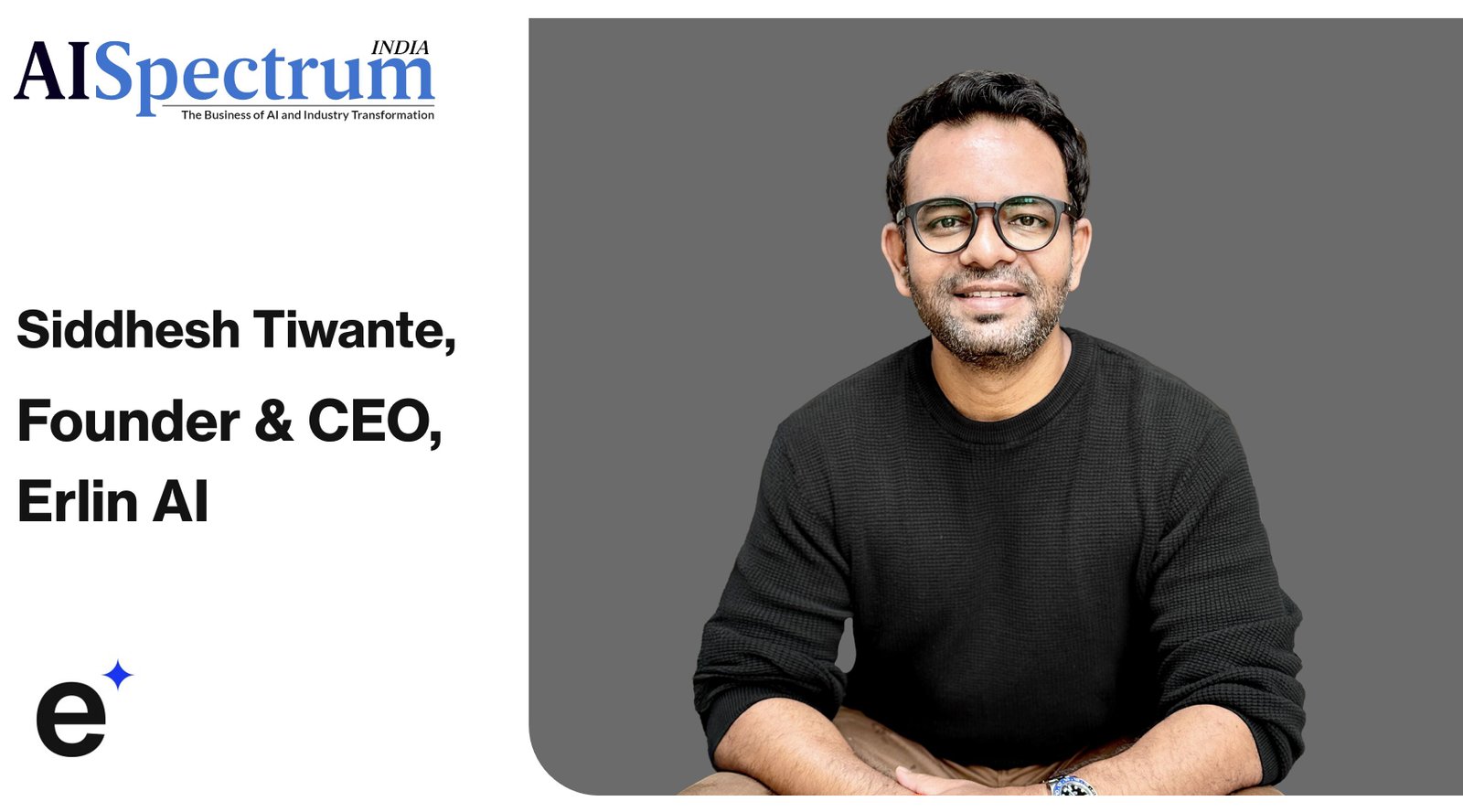
Q1: What inspired you to start Erlin and focus specifically on AI visibility and answer engine optimisation at this stage of market evolution?
Honestly, we built Erlin for ourselves first.
Early 2024, we were running an agency and kept hitting the same wall with clients. We'd optimize their content, get them ranking on Google, but we would manually check if they ranked on ChatGPT and Perplexity. We realized we needed better tools to track this, so we built something internal. Just a workflow to monitor where clients showed up across AI platforms and figure out why they didn't.
The pattern became obvious pretty quickly. ChatGPT launched shopping features in September. Perplexity was growing fast. Our ecommerce clients were seeing a traffic shift, people weren't just searching anymore, they were having full conversations with AI before making purchase decisions.
Today 81% of AI traffic comes from ChatGPT, 10% from perplexity and the rest from others. 2x - 3x conversion compared to other channels and AI search is set to overtake traditional search by 2028. Brands could see the shift happening but had no way to measure it, no way to act on it. Turns out, the tools we'd built for ourselves every brand and agency needs. Thats how erlin was born.
Q2: How does your approach differ fundamentally from traditional SEO and existing AI optimisation tools?
Most tools out there are one-dimensional. They track AI visibility, show you where you appear, where you don't. A few add workflows to help you write content for prompts you're missing. That's it. Monitoring plus some content generation.
Erlin is different because we build the complete content strategy for both AI visibility and SEO together. We're not just tracking, we're looking at your conversion data, your target audience, your existing SEO performance, your current AI search presence, and building a strategy that considers all of it.
Think of it this way: other tools answer "Are we visible in AI search?" We answer "Are you visible in AI search? What do we need to rank and get recommended? How should it be structured? And what will actually drive conversions from both Google and ChatGPT?"
It's your go-to tool for everything. You're not juggling five different platforms, one for SEO tracking, one for AI monitoring, one for content strategy, one for execution. With Erlin, it's all in one place, working together.
Q3: What early signals or outcomes are you seeing from customers in terms of visibility, brand authority, or commercial impact after adopting Erlin?
Two things stand out.
First, traffic quality. Traffic coming from AI search platforms converts 2× to 3× better than regular organic search. Makes sense when you think about it, by the time someone clicks through from a ChatGPT recommendation, they've already done their entire research. They're not browsing, they're buying.
Second, operational efficiency. Teams are saving 20 to 30 hours per person every week on content research, strategy, and content operations. Instead of manually checking AI platforms, researching what works, figuring out gaps. Erlin automates the research layer and tells you exactly what to do.
The combination matters. Better conversion rates plus massive time savings means teams can focus on execution instead of discovery. They know what to build, why it matters, and what the expected outcome is.
Q4: As generative AI increasingly becomes the first touchpoint for product discovery, what structural changes do you see emerging in discovery and consumer decision making?
The biggest shift? People are doing their full funnel research inside AI platforms now.
Top of funnel "What solutions exist for this problem?" Middle of funnel—"Compare these three options." Bottom of funnel—"Which one should I buy?" All of that happens in a single ChatGPT conversation. They're not clicking through to ten different websites, reading reviews, comparing features across tabs.
The traditional funnel assumed people moved through stages across different touchpoints. That's changing fast. Now it's one conversation, one platform, and AI is doing the synthesis work.
What this means for brands: if you're not present in that conversation—if AI can't find, understand, and confidently cite your brand—you don't exist in the customer's journey at all. The decision is made before they ever leave the AI platform.
Our State of AEO research tracked 500+ brands across ChatGPT, Claude, Gemini, and Perplexity. Top performers appear in 81% of relevant prompts. Bottom performers? 9%. The gap is massive and it's widening because most brands don't even know this research layer exists yet. McKinsey projects that AI search is set to overtake traditional search by 2028, with $750 billion in US revenue flowing through AI-powered search platforms. The window to establish visibility is closing fast.
Q5: From your conversations with brands, what are the biggest challenges teams face in becoming visible inside AI generated answers, and how does Erlin address these challenges in practice?
The biggest misunderstanding we see: brands think this is about individual pages ranking.
It's not. It's about brand context. AI doesn't just look at one page and decide whether to cite you. It's synthesizing information from your website, your Reddit mentions, your reviews, your YouTube comments, what people say about you on social media—and building a coherent understanding of what your brand is, who it's for, and whether it's trustworthy.
The second thing brands miss: the entire user journey happens inside these AI search platforms. Someone asks ChatGPT about a problem (top of funnel), discusses solutions (middle of funnel), gets specific recommendations (bottom of funnel)—all in one conversation thread. If your brand context isn't strong enough for AI to understand and cite you confidently at each stage, you're out.
Here's how Erlin addresses this in practice:
We start with brand context mapping—understanding how AI currently sees your brand across all these sources. Not just your website. Then we identify gaps. Maybe your website is strong but you have zero presence in community discussions. Maybe your Reddit mentions are negative or outdated. Maybe your structured data is missing so AI can't extract clear facts.
Then we build content strategy that covers the full funnel within AI platforms. Content that works for "What is X?" questions. Content that works for "Compare X vs Y" questions. Content that works for "Should I buy X?" questions. And we make sure it's consistent everywhere—your official sources and the places where real people talk about you.
It's not about gaming prompts. It's about making your brand understandable and citeable at every stage of the research journey that now happens inside AI.
Q6: Looking ahead to the next twelve to eighteen months, how do you see Erlin evolving in terms of product roadmap, market focus, or partnerships?
Right now, very few brands have any kind of AI visibility strategy. In 12 to 18 months, that number needs to be closer to 80%—because AI search will be infrastructure, not an experiment. We're building for that.
On the product side, we're expanding into custom LLM solutions for enterprise. Large companies need more than tracking and optimization—they need AI systems that actually understand their products, their positioning, their industry context. So we're building purpose-built language models trained on their specific brand narrative. When ChatGPT or Perplexity makes a recommendation, it should have deep, accurate knowledge of what that company offers. That's the product direction.
For market expansion, we're scaling across USA, India, and Australia. These are the three markets where AI adoption is moving fastest and where brands are actively looking for solutions. India is particularly interesting—rapidly digitizing economy, high English-language content production, and early AI search adoption. Indian startups and enterprises are recognizing this shift faster than we expected. There's a competitive advantage window there that won't stay open long.
Partnership strategy runs two tracks. First, white-label solutions for agencies. Most agencies see the shift happening but don't have the infrastructure to deliver AI visibility as a service. We handle the platform, they keep the client relationship and deliver measurable results. Second, enterprise integrations—CRM systems, analytics platforms, marketing automation tools companies already use. The goal is making AI visibility tracking as natural as checking Google Analytics. No new dashboard to learn, no separate workflow.
The long-term vision is straightforward: by 2027, every brand will have an AI visibility score. Similar to how domain authority became standard for SEO. Right now brands can't answer basic questions, are we winning or losing in AI search? How do we compare to competitors? What's the ROI? We're building the measurement standard that makes AI visibility quantifiable and tied directly to revenue.
This isn't a tool. It's infrastructure. The same way brands needed SEO when Google became the default search behavior, they need systematic AI visibility as search shifts to conversational platforms. The brands building this infrastructure now will own discovery in their categories. The ones waiting will find themselves systematically excluded from where their customers are actually making decisions.