


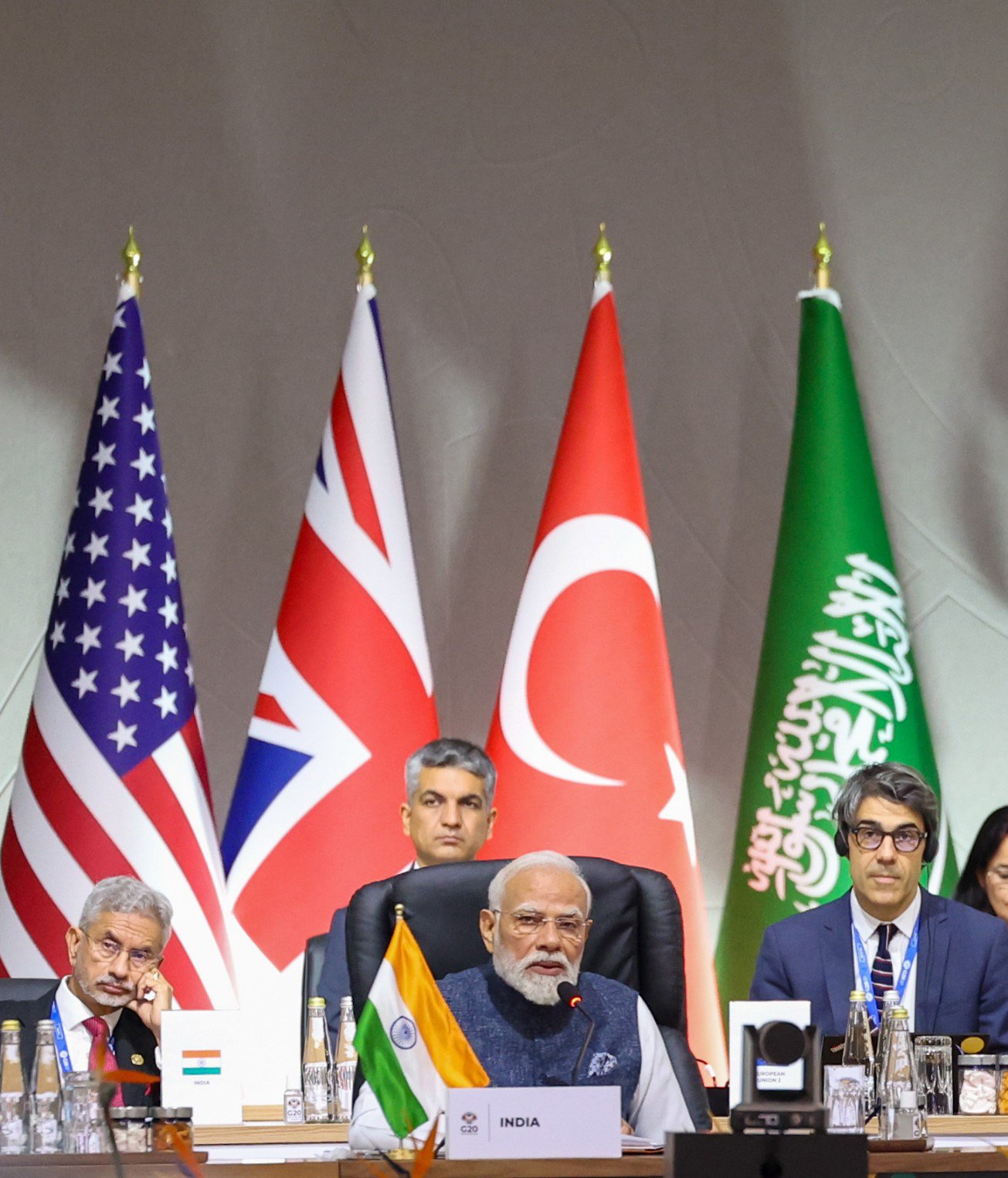
In a powerful intervention that placed artificial intelligence at the forefront of global economic and geopolitical discussions, Prime Minister Narendra Modi urged G20 leaders to adopt a unified, human-centric framework for the governance and deployment of emerging technologies. Speaking at the G20 Summit, Modi warned that the rapid advancement of technology is increasingly concentrating opportunities and resources in the hands of a select few, which not only risks global inequality but also hampers innovation itself.
Modi emphasised that the world is experiencing heightened competition for critical technologies, making it essential to rethink the global approach to innovation. He stated, “We must promote technology applications that are human-centric rather than finance-centric, global rather than merely national, and open-source rather than exclusive,” positioning India’s digital transformation as a model of this philosophy.
Highlighting India’s leadership in digital payments and inclusive digital infrastructure, the Prime Minister outlined the country’s approach to AI, which is based on three pillars: equitable access, population-scale skill development, and responsible deployment. He noted that through the India–AI Mission, the government is creating accessible high-performance computing systems designed to extend the benefits of AI to every district and every Indian language.
Modi called for an international consensus to prevent the misuse of AI, urging countries to collaborate on building a Global AI Compact founded on human oversight, transparency, safety-by-design, and strict prohibitions against deepfakes, criminal activities, and terrorist misuse. While acknowledging AI’s transformative potential, he reiterated that “the ultimate responsibility for decision-making must always remain with human beings.”
He announced that India would host the AI Impact Summit in February 2026, themed "Sarvajana Hitaya, Sarvajana Sukhaya" welfare for all, happiness for all and invited all G20 nations to participate.
Addressing global economic cooperation, Modi stressed the importance of shifting focus from the “jobs of today” to building the “capabilities of tomorrow.” He called for a global framework for talent mobility to accelerate innovation. Additionally, he emphasised lessons learned from the COVID-19 pandemic, recalling India’s role in supplying vaccines and medicines to over 150 countries, and urged nations to view each other not merely as markets, but as long-term partners.
In concluding his address, the Prime Minister highlighted India's guiding message to the world:
- Development must be sustainable,
- Trade should be trusted,
- Finance must be fair, and
- Progress must ensure all-inclusive prosperity.
His speech reaffirmed India's ambition to play a defining role in shaping the global governance of AI and emerging technologies while anchoring innovation in equity, responsibility, and shared progress.