

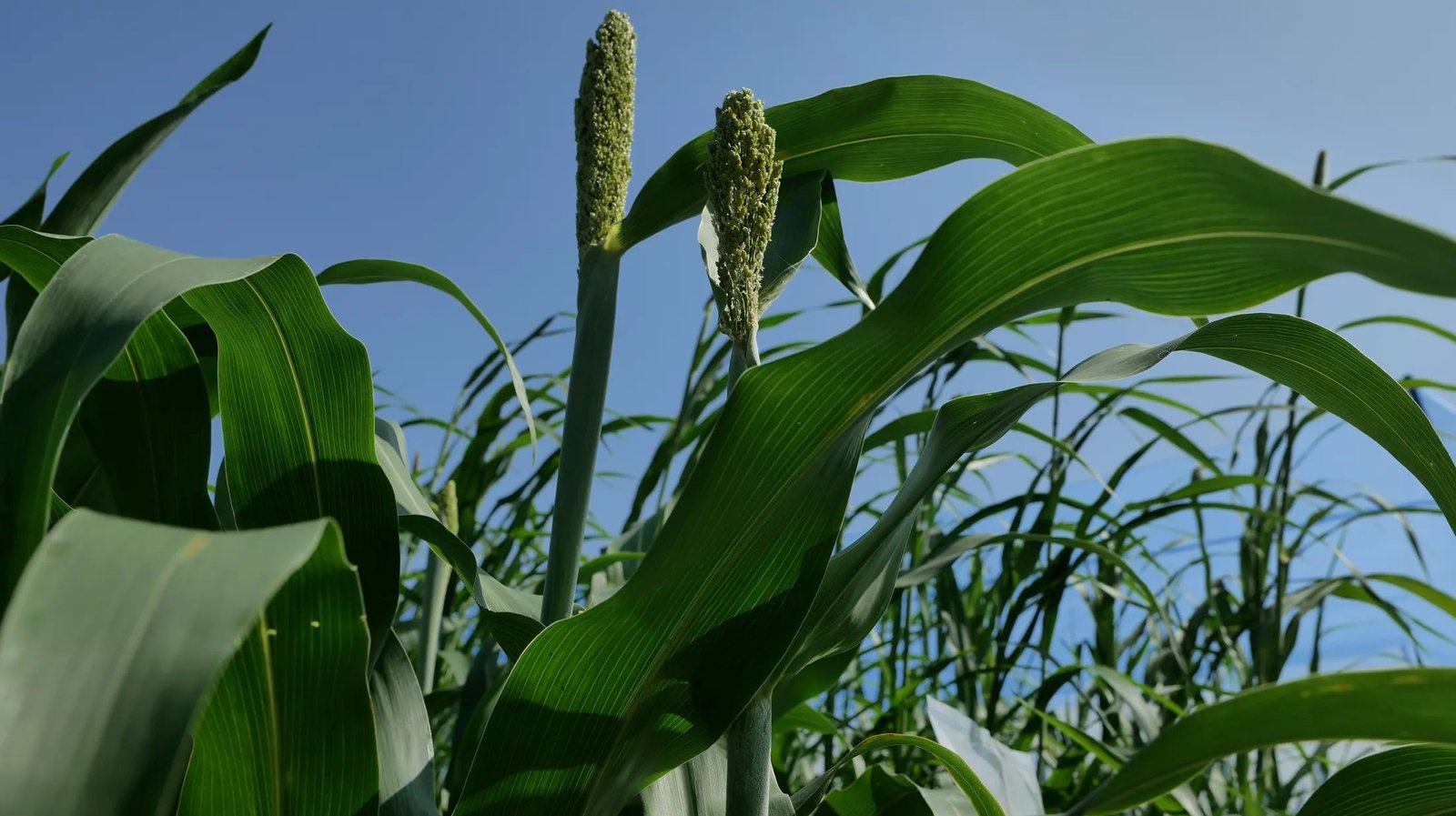
Google DeepMind and Google.org have partnered with the International Crops Research Institute for the Semi-Arid Tropics (ICRISAT), the HudsonAlpha Institute for Biotechnology and the Department of Genome Sciences at the University of Washington to use artificial intelligence (AI) and machine learning to accelerate the development of climate-resilient crops, starting with sorghum.
The collaboration aims to create an open-access genetic atlas of sorghum, drawing on a representative sample from ICRISAT’s genebank, which contains more than 44,000 distinct seed varieties from over 90 countries. The initiative will combine advanced genetic analysis with machine learning to identify promising genetic combinations that could help researchers and breeders develop more productive and resilient crop varieties.
Sorghum, also known as jowar, is a climate-resilient, nutrient-rich crop with applications ranging from human consumption and animal feed to biofuel production. Its ability to grow in dryland conditions makes it particularly relevant as climate change places increasing pressure on agricultural productivity and global food security.
According to the organisations, the AI-supported genetic catalogue will be made available as a global public resource, helping researchers investigate crop characteristics and identify promising varieties more efficiently than traditional breeding approaches, which can take a decade or longer.
As part of the initiative, Google DeepMind will also support a three-year postdoctoral fellowship at ICRISAT. This marks the company's first such fellowship in India and its first outside the UK. The fellowship will focus on developing tools to characterise the genomes of other important crops, including chickpea, groundnut and pigeon pea.
The initiative aligns with India's focus on millets and climate-resilient agriculture, while demonstrating how AI-driven genomic research can support agricultural innovation beyond national borders.
ICRISAT said the partnership would help harness AI to improve crop productivity, resilience and sustainability in dryland agriculture, while expanding access to advanced research tools for the global agricultural ecosystem.
The collaboration forms part of broader initiatives announced by Google to apply AI across crop science, education, agriculture and economic inclusion in India, with an emphasis on translating advanced research into practical, real-world outcomes.