


Artificial intelligence is playing an expanding role aboard the International Space Station (ISS), as astronauts and cosmonauts test AI-powered tools designed to improve crew efficiency, communication, and operational accuracy during space missions.
Members of Expedition 74 recently conducted trials using artificial intelligence systems that convert speech to text, enabling faster documentation of mission activities and scientific observations. The AI-assisted tools are also being evaluated for their ability to improve data handling and streamline communication between astronauts and ground-based mission controllers, helping reduce manual workload and operational delays.
Roscosmos cosmonauts Sergey Kud-Sverchkov and Sergei Mikaev led the AI testing activities, exploring how intelligent automation can support daily mission tasks and enhance crew productivity in the challenging microgravity environment. The initiative reflects a growing push to integrate advanced digital technologies into space operations, allowing astronauts to focus more on research and critical mission activities.
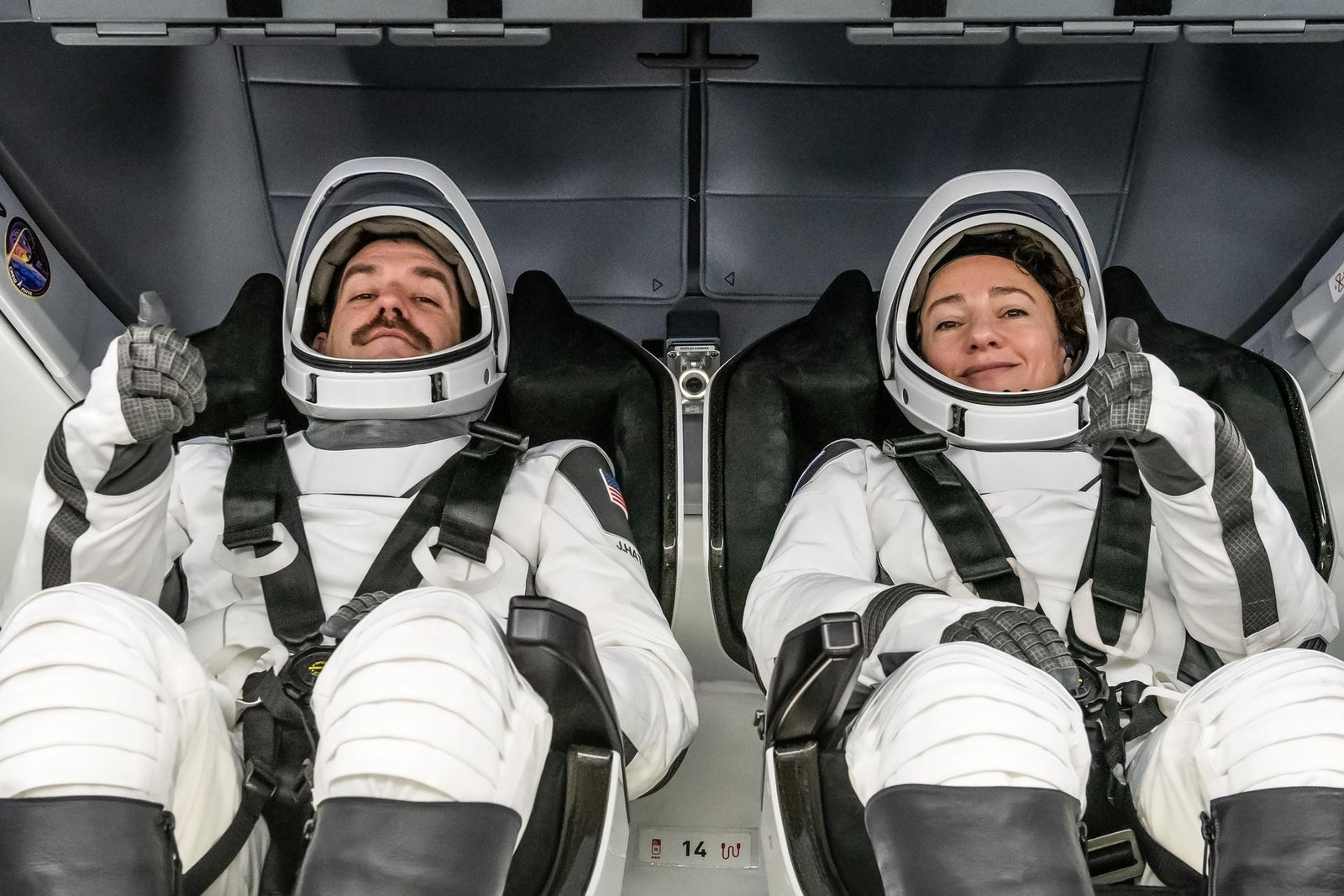
The AI experiments are taking place alongside preparations for NASA’s SpaceX Crew-12 mission, which is targeting launch no earlier than February 11 from Cape Canaveral Space Force Station in Florida. The four-member crew is expected to dock at the station the following day and spend approximately nine months conducting advanced microgravity research aimed at improving life on Earth and supporting future deep space exploration.
As part of ongoing technology upgrades, astronauts also tested the new Ultrasound 3 biomedical imaging device, which uses advanced digital capabilities to support real-time medical monitoring of crew members. The system enables high-precision imaging of cardiovascular, abdominal, and musculoskeletal systems while allowing doctors on Earth to guide procedures remotely—demonstrating how AI-supported and digital healthcare technologies are becoming essential in space missions.
Space agencies are increasingly exploring artificial intelligence to enhance spacecraft operations, astronaut health monitoring, and scientific research in orbit. AI-driven automation is expected to play a crucial role in supporting long-duration missions, including planned lunar and Mars expeditions, where faster decision-making and reduced reliance on ground control will be essential.
The ongoing AI trials aboard the ISS mark another step toward building smarter, more autonomous space operations while improving safety, efficiency, and scientific productivity in human spaceflight.
Mikaev began his shift testing space-to-ground communications hardware with mission controllers in Russia. Afterwards, the first-time space flyer checked the Elektron oxygen generator’s water tanks for air bubbles to ensure the life support device’s continuous operation.