
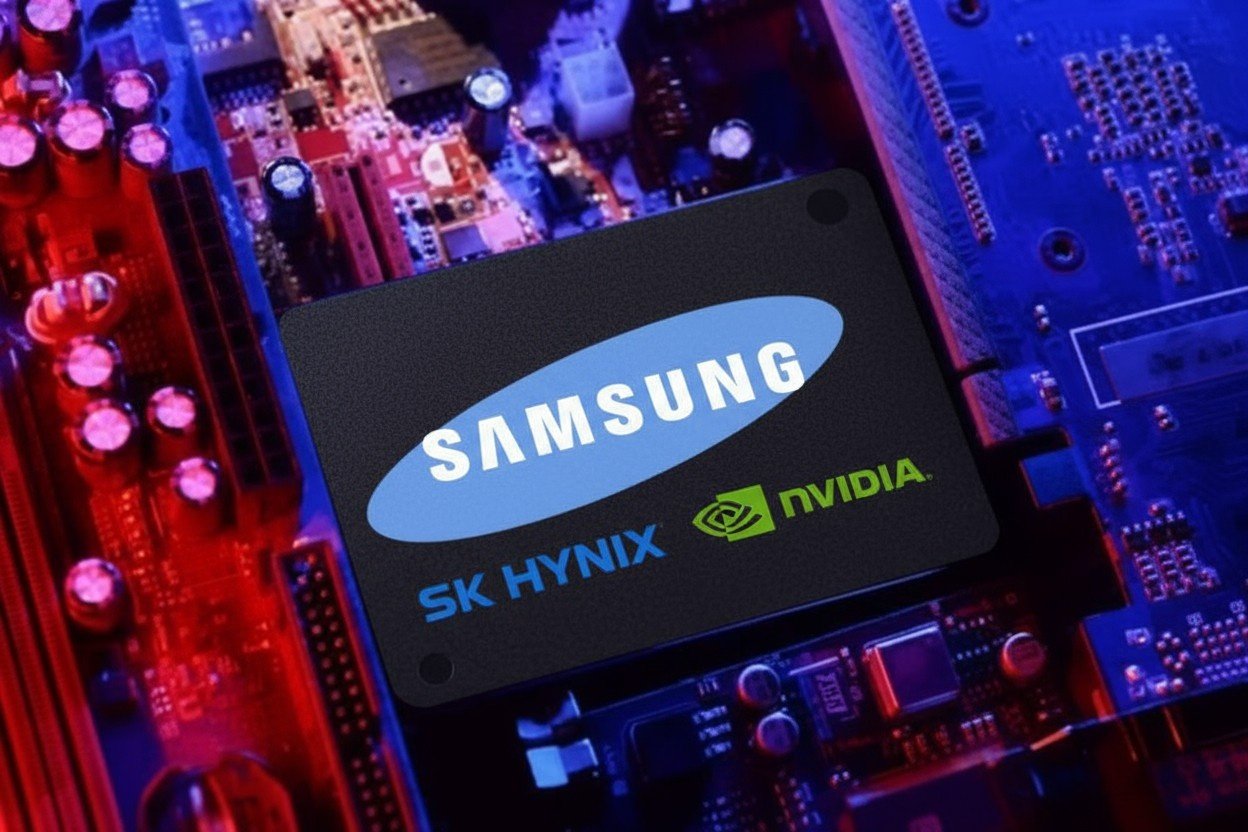
South Korea's benchmark equity index extended its best monthly performance in more than two decades on Tuesday, with investor fervor over the country's artificial intelligence chip-making role buoyed by high-profile deals struck with Nvidia.
The Kospi Index, which jumped 20% in October, the best monthly gain since 2001, opened November with a strong performance, rising as high as 2.5% to an all-time high on Monday.
The rally, consistent with recent trading sessions, was largely propelled by sustained optimism surrounding leading Korean technology firms, including Samsung Electronics and SK Hynix, both key suppliers to American chip designer Nvidia. That enthusiasm has also lifted shares of ancillary companies such as power equipment manufacturer HD Hyundai Electric, along with robotics and autonomous driving firms expected to benefit from AI development.
"Today's rally is the Jensen Huang effect," said An Hyungjin, chief executive of Billionfold Asset Management, referring to Nvidia's chief executive, who visited Seoul last week to announce commercial agreements. The impact of Huang's meetings with Samsung Chairman Jay Y. Lee and other industry leaders "is being amplified in the market," An added.
Shares in SK Hynix jumped as much as 10% Monday after an analyst more than doubled his price target for the chipmaker. Han Dong-Hee at SK Securities urged investors to abandon a long-standing valuation metric typically applied to cyclical stocks like memory chips.
"With a new paradigm, we need a new multiple," Han wrote in a note, raising his target on SK Hynix to 1 million won (£570). The brokerage is not affiliated with SK Hynix.
The performance of the South Korean market reflects growing investor confidence that the country's semiconductor manufacturers will capture significant value from the boom in artificial intelligence. SK Hynix makes the high-bandwidth memory chips that are crucial for AI processing, while Samsung makes a diverse array of semiconductors in AI applications.
Nvidia's partnerships with Korean suppliers have become increasingly strategic as the global appetite for AI chips heightens. The US firm relies on Korean makers of specialized memory components to allow its graphics processing units to efficiently process AI workloads.
The rally also underlines how concentrated investor enthusiasm for AI technologies has now become, with markets rewarding companies positioned as suppliers or beneficiaries of AI development irrespective of broader economic conditions.
South Korea, being heavily weighted towards technology stocks, makes its indices particularly sensitive to AI-related sentiment. The Kospi is constituted in a way that movements at major chipmakers can meaningfully influence the overall index performance.
Yet some analysts caution that valuations of Korean technology stocks have surged too far, too fast for near-term earnings to catch up with, while the suggestion to discard traditional valuation metrics for cyclical stocks such as memory chips raises questions over whether current prices adequately reflect the historical volatility of the sector.
Historical boom-and-bust supply-demand imbalances have characterized memory chip markets. While AI applications create new sources of demand, how fundamentally different this makes the cyclicality of the business is debated among observers.
The October rally--South Korea's strongest monthly performance in 23 years--also mirrors a broader set of factors, including corporate governance reforms and increased foreign investment flows into Korean equities, which have traditionally traded at discounts to other developed markets.
But because that surge happened to coincide with Nvidia partnerships and AI enthusiasm, it would appear that technology optimism is the primary driver for recent gains.
For policymakers and corporate leaders in South Korea, this market performance serves as validation for strategies positioning the country as a vital player in global AI supply chains. The government has announced a number of initiatives that support semiconductor manufacturing and AI development. Whether the rally proves sustainable partly depends on continued AI spending growth globally and Korean companies maintaining their competitive positions against rivals in Taiwan, Japan, and elsewhere competing for the same opportunities.