

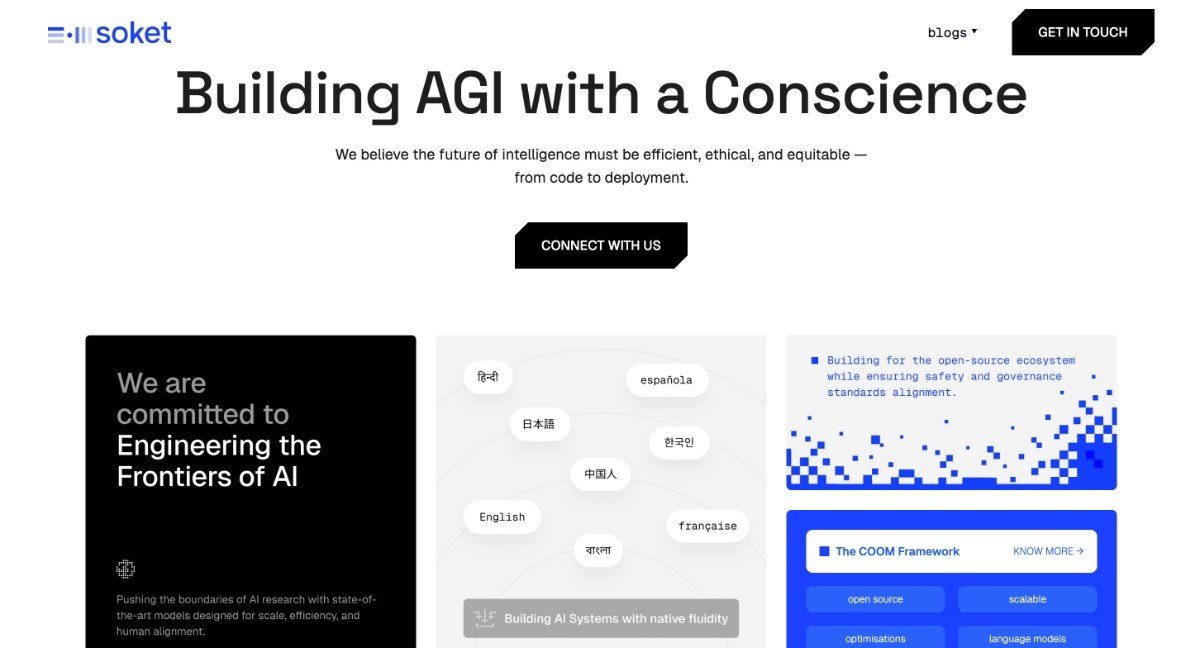
Something is happening in the AI world in India. Soket AI Labs has launched DHRITH, a modern speech recognition system that is capable of recognizing the voice of Indian people with all their subtle emotions, tones, slang, and even the famous mixing of languages .
Why it’s a big deal?
Because in India, we talk more than we type. We send voice notes, mix English and Hindi, throw in sarcasm, and expect tech to keep up — but most voice tools just don’t. They miss tone, mangle mixed sentences, and totally lose context.
Soket’s team summed it up well: *“In India, most data doesn’t live in text – it lives in voice.”* That’s the gap DHRITH aims to fill.
Built under Project EKΛ, supported by IndiaAI and the Ministry of Electronics and IT, DHRITH is designed to “listen the way India speaks.” It’s not a repackaged Western model instead it’s built from scratch for Indian voices.
Here’s what makes it stand out:
Emotion tagging: It knows when someone sounds happy, annoyed, or upset — imagine customer support that can sense frustration.
Code-mixed fluency: “Yaar, what are you doing?” finally makes sense to AI.
Speaker detection: It can tell who’s speaking in group calls or meetings.
Context awareness: It gets when a phrase is a joke or serious talk.
Soket plans to open up an API soon, letting others build tools on top of DHRITH, with a detailed technical blog to follow.
But beyond tech specs, this feels like a cultural shift. India’s starting to build AI tools that reflect our way of speaking, not force us to fit someone else’s mold. From UPI to homegrown social platforms — and now speech recognition — Indian tech is finding its own rhythm.
If DHRITH delivers on its promise, it could power the next generation of Indian AI — in healthcare, education, customer service, and accessibility. Currently, everyone is focused on the forthcoming demo. However, it is certain that the AI narrative of India is being expressed through us — diverse languages, feelings, and distinctly Indian.