

The rapid advancement of artificial intelligence is triggering a structural shift that could fundamentally redefine human labour, much like the transition from horse-drawn carriages to automobiles transformed society more than a century ago, according to senior journalist Milind Khandekar.
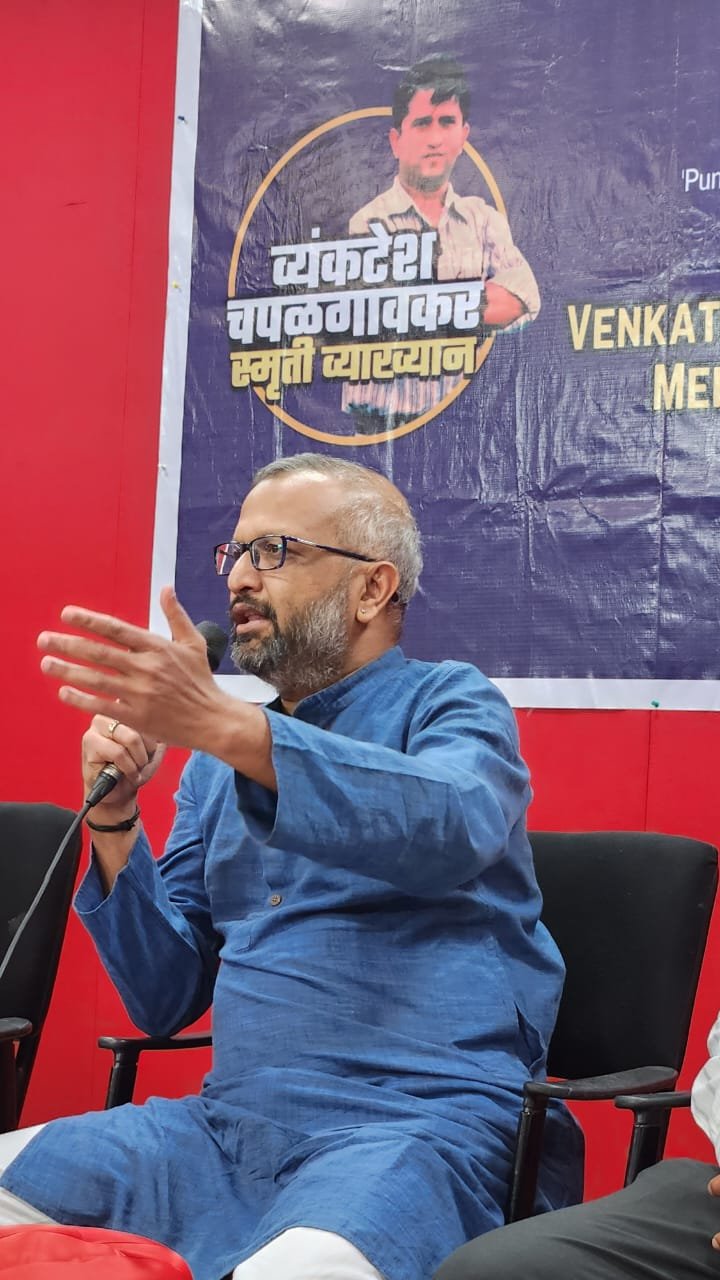
Speaking at the Venkatesh Chapalgaokar Memorial Lecture organised by the Pune Shramik Patrakar Sangh and Friends of Venkatesh in Pune, Khandekar warned that professionals who fail to adapt to AI risk becoming irrelevant in the evolving digital economy.
Drawing a historical parallel, Khandekar recalled the protests that erupted when auto-rickshaws replaced horse-drawn transport in cities like Pune. “Today, horses still exist, but they are no longer central to the economy,” he said. “The fear with AI is that humans may face a similar future remaining present, but without meaningful work.”
Khandekar highlighted how AI is already disrupting industries ranging from finance to IT. He cited Pune-based Bajaj Finserv as an example, noting that the company is using AI-driven chatbots and automated calls to facilitate loans worth hundreds of crores, while a large share of its marketing content is now AI-generated.
He also pointed to ongoing workforce reductions in the IT sector, referencing reports of layoffs across major technology firms and estimates suggesting that AI could threaten millions of jobs globally.
In journalism, Khandekar described how technological evolution has continuously reduced manual roles from hand compositors in print media to large television production crews. “Earlier, a two-minute TV story required six people. Today, a single journalist with a smartphone can handle the entire process,” he said.
Explaining the shift from traditional search engines to generative AI platforms, Khandekar said Google functioned like a giant library, while tools such as OpenAI’s ChatGPT and Google’s Gemini act more like professors directly providing answers. He warned that this shift could disrupt the traffic-driven revenue models of digital publishers and news organisations.
Despite the disruption, Khandekar maintained that journalism itself will survive because AI cannot independently conduct on-ground reporting or gather first-hand information. However, he emphasised that journalists must learn to work alongside AI tools to remain relevant.
“AI is here to stay,” he said, adding that verification and responsible usage of AI-generated information will become increasingly critical in the years ahead.