

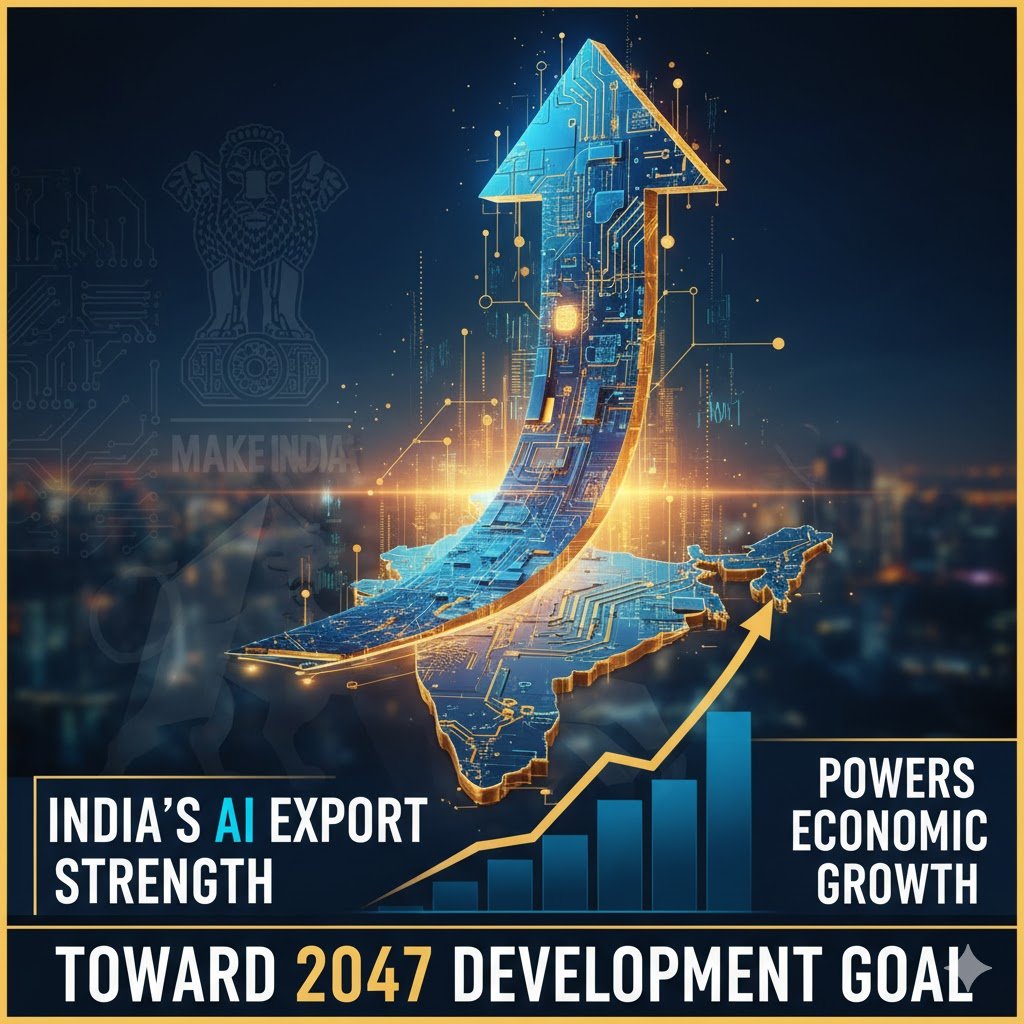
India's capacity to develop and export artificial intelligence solutions positions the country to drive productivity improvements and employment growth both domestically and internationally, according to a senior government technology official.
S Krishnan, secretary for electronics and information technology, outlined the government's technology strategy whilst addressing a preview event for the Emerging Science, Technology, and Innovation Conclave (ESTIC) 2025 on Thursday. The session focused on AI's potential social impact ahead of the broader conference.
The civil servant emphasised that India's ambition to achieve developed-nation status by 2047—a target the government terms "Viksit Bharat"—depends fundamentally on technology adoption, with artificial intelligence serving as a cornerstone of that transformation.
Krishnan highlighted India's substantial technical workforce as a strategic advantage, noting the country's ability to create AI applications for global deployment rather than solely domestic consumption. This capability, he suggested, allows India to capture economic benefits from enhanced productivity and efficiency gains worldwide.
The comments reflect New Delhi's broader push to position India as a technology hub capable of competing with established AI powers including the United States and China. The country boasts a large pool of software engineers and technology professionals, many of whom work for multinational corporations whilst others drive a burgeoning startup ecosystem.
India's government has increasingly emphasised artificial intelligence as central to economic planning, viewing the technology as instrumental in modernising agriculture, healthcare, education and public services. Officials argue that AI adoption can help address development challenges whilst simultaneously creating export opportunities in software services—a sector where India has long maintained competitive strength.
The ESTIC conference, where Krishnan delivered his remarks, focuses on emerging technologies and their application to social challenges. The event's emphasis on AI's societal impact aligns with growing international concern about ensuring technology development serves broad public benefit rather than narrow commercial interests.
India's stated 2047 development goal marks the centenary of independence from British rule, with successive governments framing the target as a national mission requiring transformation across infrastructure, manufacturing, and digital capabilities.