

(Deep Dive by AI Spectrum India )
Artificial Intelligence (AI) has emerged as a central driver of India’s digital economy in recent years, permeating industries from healthcare to agriculture and reshaping business and governance. The rate of AI adoption in key Indian industries reached roughly 48% in FY2024, reflecting that nearly half of organizations in major sectors are now utilising AI in some form. This momentum is expected to accelerate, with an additional 5–7% rise in adoption projected in FY2025. Industry estimates suggest India’s AI market was about $6 billion in 2023 and is on track to expand to $20 billion by 2028 (a CAGR of ~26%). Moreover, AI could contribute as much as $500 billion to India’s Gross Value Added by FY2026, underscoring its potential economic impact. The Government of India has recognised AI’s strategic importance – launching a dedicated IndiaAI Mission in 2024 with a budget of over ₹10,000 crore to bolster computing infrastructure, skills, and innovation. This report provides a comprehensive overview of India’s AI landscape in 2025, examining industry-specific developments, the talent pipeline, workforce implications, and the investment climate, drawing on the latest 2024–2025 data and policy insights.
Industry Developments Across Key Sectors
AI adoption has gained a strong foothold across many sectors of the Indian economy, though uptake varies by industry. According to a 2024 study, about 87% of Indian enterprises are actively using AI solutions in some capacity. However, only around 26% of companies have achieved “AI maturity at scale,” indicating that many implementations are still at pilot or early stages. Leading sectors – notably industrial manufacturing, automotive, consumer goods retail, banking & financial services, and healthcare – account for roughly 60% of AI’s total value contribution in India. The banking and financial services industry (BFSI) is a clear frontrunner with an AI adoption rate of 68% in FY2024, followed by the technology sector at about 60–65%. By contrast, traditional sectors like manufacturing (28% adoption), infrastructure & transport (around 20%), and media & entertainment (only ~10%) have lagged in integrating AI so far. Table 1 summarises the AI adoption rates across key sectors in India:
Table 1: AI Adoption Rates by Sector (India, FY2024)
|
Sector |
Approx. AI Adoption Rate |
|
Banking & Financial Services (BFSI) |
68% |
|
Technology (IT/ITeS) |
60–65% |
|
Pharmaceuticals & Healthcare |
52% |
|
FMCG & Retail |
43% |
|
Manufacturing |
28% |
|
Infrastructure & Transport |
20–22% |
|
Media & Entertainment |
10–12% |
These figures reflect the proportion of organizations in each industry that have deployed AI in some capacity. Below is a sector-wise analysis of AI adoption, innovations, and use cases in India:
Healthcare and Biotech
AI is transforming healthcare delivery in India, improving both access and quality of care. Intelligent systems are helping doctors detect diseases earlier and analyse medical scans with greater accuracy. For example, AI-driven diagnostic tools can flag anomalies in X-rays or MRIs, enabling quicker detection of conditions like tuberculosis or cancer. Telemedicine platforms powered by AI are connecting patients in remote rural areas with specialists in top urban hospitals, thus saving time and costs while improving care outcomes. Notably, India is participating in global initiatives such as HealthAI (a consortium for safe, ethical AI in healthcare) and has forged collaborations through the Indian Council of Medical Research (ICMR) with countries like the UK and Singapore to adopt global best practices in medical AI. A growing number of Indian healthtech startups are leveraging AI for predictive analytics (e.g. forecasting disease outbreaks), medical imaging (assisted diagnosis from scans), and personalised treatment recommendations using patient data. AI-based screening solutions are addressing critical needs; for instance, startups have developed AI tools for early breast cancer detection and AI-driven platforms for reading chest X-rays, which are being piloted in public healthcare programmes. In sum, AI innovation in healthcare ranges from smart hospital systems and virtual health assistants to drug discovery – all contributing to a more efficient, accessible healthcare system in India, with one estimate suggesting AI could add around $30 billion to the healthcare sector by 2025.
Agriculture
In India’s vast agriculture sector, AI has begun to act as a digital agronomist for farmers, boosting productivity and risk management. Machine learning models crunch weather, soil, and crop data to provide timely advisory – for instance, predicting rainfall patterns, identifying pest infestations early, and recommending optimal sowing or irrigation schedules. The Ministry of Agriculture has introduced initiatives like Kisan e-Mitra, an AI-powered virtual assistant that helps farmers access information on government schemes (such as PM-Kisan income support) and get answers to agronomy questions in local languages. Advanced systems like the National Pest Surveillance programme integrate satellite imagery, weather forecasts, and soil health data to give real-time alerts and tailored advice to farmers, thereby improving crop yields and income stability. AI-driven solutions are also being deployed in supply chain and crop marketing – for example, computer vision techniques are used to grade produce quality, and price forecasting algorithms help farmers make informed sale decisions. A number of agritech startups have emerged, offering innovations like drone-based crop monitoring, AI apps for plant disease identification via smartphone images, and predictive analytics for commodity pricing. These developments illustrate how AI is beginning to address long-standing agricultural challenges in India, from reducing crop losses due to pests and weather, to optimising resource use and guiding policy for rural development.
Banking, Finance and Fintech
The financial services industry in India is at the vanguard of AI adoption, driven by large-scale data availability and competitive pressure to automate. BFSI not only leads in adoption percentage (nearly 70% of firms) but also accounts for about 30% of AI use outside the core tech sector. Banks, insurers, and fintech companies are employing AI for a wide range of applications: fraud detection systems use machine learning to flag anomalous transactions in real time, reducing fraud losses; credit scoring algorithms analyse alternative data to evaluate loan applicants with thin credit histories, expanding financial inclusion; and chatbots/virtual assistants handle millions of customer queries in multiple languages, improving service response times. Nearly all major Indian banks now have AI-driven chatbots (for example, SBI’s virtual assistant or HDFC’s EVA chatbot) handling routine customer service and guiding users through digital services. In insurance, AI models automate claims processing by analysing claims data and even inspecting images of vehicle damage for faster settlements. On the capital markets side, algorithmic and high-frequency trading leverage AI for pattern recognition to inform trading strategies. Indian fintech startups are rising in prominence – Signzy, for instance, provides AI-based digital onboarding and verification for banks (using document AI and facial recognition) to streamline compliance. According to industry insights, enterprise software firms focusing on AI have attracted significant investment, reflecting how financial and other sectors are embracing AI-driven automation. While highly automated, the sector is also working with regulators to ensure responsible AI use, particularly in areas like credit decisioning and data privacy. Overall, AI is helping India’s financial industry expand outreach (e.g. AI-powered lending to underserved segments) and improve efficiency, contributing to a more inclusive financial system.
Manufacturing and Industry 4.0
Indian manufacturing is undergoing a gradual digital transformation, with AI playing an increasing role in smart factories and Industry 4.0 initiatives. Use cases in manufacturing include predictive maintenance (AI systems predict equipment failures in advance to minimise downtime), quality control (computer vision systems inspect products on assembly lines for defects), and supply chain optimisation (machine learning forecasts demand and optimises inventory). The automotive sector in particular has been quick to integrate AI and robotics for automation, given the global shifts towards electric and autonomous vehicles. According to one NASSCOM/MeitY survey, 65% of large Indian manufacturers had adopted some form of AI by 2024, a jump from 45% in 2022, although other studies indicate many deployments are still nascent pilots. A staffing analysis by TeamLease found only ~28% of manufacturing firms had reached meaningful AI adoption by FY2024, significantly behind services sectors. The discrepancy suggests that while many manufacturers are experimenting with AI, far fewer have achieved scale or enterprise-wide implementation as of 2024. Nevertheless, certain industries are forging ahead: industrial and automotive companies are among the leading contributors to AI’s economic value in India. Global Capability Centres (GCCs) of multinational manufacturers in India are also developing AI solutions for global use. Emerging startups like Uptime AI are providing AI-driven predictive maintenance for factories, and several Indian automotive firms are using AI for improved production planning and logistics. Additionally, robotics combined with AI (e.g. robotic arms with vision intelligence) is being gradually deployed in assembly lines for tasks like welding, painting, and materials handling. The Indian government’s establishment of Centres of Excellence in Sustainable Cities and Infrastructure also supports applying AI to smarter urban systems and industrial processes. Going forward, with the push for Make in India and advanced manufacturing, AI adoption is expected to rise, helping domestic industry enhance productivity, reduce costs, and maintain quality standards at scale.
Education and Skilling
In the education sector, AI is being harnessed to make learning more personalised and inclusive. Under India’s National Education Policy (NEP) 2020, the schooling system has begun integrating AI into the curriculum: the Central Board of Secondary Education (CBSE) now offers a 15-hour introductory AI skills module for Class VI students, and an optional AI subject for students in Classes IX to XII. The aim is to impart basic AI literacy and practical knowledge from an early age. Moreover, educational platforms are leveraging AI to enhance content delivery. The national DIKSHA digital learning platform (run by NCERT) uses AI tools like intelligent keyword search in video lectures and text-to-speech “read aloud” features to improve accessibility – especially benefiting visually impaired learners. This means students can more easily find relevant educational content and have it presented in modes suited to their needs. Another notable initiative is YUVAi (Youth for Unnati and Vikas with AI), a programme for school students (Classes 8–12) launched by the National e-Governance Division. YUVAi provides a platform for students across the country to learn AI skills and apply them to solve real-world problems across eight thematic areas (ranging from agriculture and healthcare to smart cities and law). By encouraging projects and hackathons on social challenges, such initiatives are cultivating an AI mindset among youth. At the higher education level, universities and Indian Institutes of Technology (IITs) have started offering specialised degrees in AI, data science, and machine learning, while online education providers see massive enrolment in AI courses. In fact, India led the world in Generative AI online course enrollments on Coursera in 2024 with 1.3 million learners, although the country ranked only 89th globally in actual AI skills proficiency, highlighting a gap in quality of learning. (This gap is being addressed through revised curricula and industry partnerships, discussed later in the talent section.) Within classrooms, AI-based tools like adaptive learning systems are being piloted – these systems adjust the difficulty and style of content based on each student’s progress, which can particularly help teachers in large, diverse classrooms. India’s EdTech companies are also integrating AI for tutoring, exam preparation, and career guidance solutions. Overall, the education sector’s adoption of AI is twofold: using AI to improve educational delivery and outcomes, and teaching AI to students to prepare the future workforce. Both are crucial for a nation of India’s scale, and policy support has been strong to ensure that AI literacy penetrates from school to skilling programmes.
Government Services and Public Sector
The Indian government and public sector agencies are increasingly deploying AI to enhance governance, public service delivery, and infrastructure management. A prominent example is in the justice system: under the e-Courts Project Phase III, courts are integrating AI tools for tasks such as translating judicial documents, predicting case backlogs, automating routine filings, and scheduling hearings. High Courts have formed AI Translation Committees to oversee the translation of Supreme Court and High Court judgments into various Indian vernacular languages using natural language processing. As a result, digital platforms now provide citizens access to judgments in their native languages, making justice more transparent and inclusive. In governance, many government departments use AI chatbots to answer citizen queries (for instance, railway inquiries or tax questions) and to assist in application processes for licenses or certificates. A notable language AI initiative is Bhashini, an AI-powered platform launched under the Digital India programme, which offers speech-to-text, text-to-speech, and translation tools in over 20 Indian languages. Bhashini crossed one million downloads by mid-2025 and integrates more than 350 AI models, providing linguistic support to citizens accessing digital services. It has also partnered with Indian Railways to deploy multilingual voice-based solutions on public platforms, thereby breaking language barriers in service delivery.
Public sector use of AI extends to predictive analytics for utilities and environment. The India Meteorological Department employs AI-based models to improve weather forecasts – predicting rainfall, fog, lightning strikes, and even tracking cyclones using advanced image analysis techniques. An upcoming AI chatbot named MausamGPT is planned to provide real-time weather and climate advice to farmers and disaster response teams. In urban governance, city administrations are experimenting with AI for traffic management (using real-time data to adjust traffic signals and reduce congestion) and for smart city services like waste management and energy optimization. Furthermore, AI is being used in welfare schemes: for example, algorithms help identify beneficiaries by analysing large datasets (benefitting programmes like subsidy distributions and fraud detection in social schemes). Public sector enterprises in India (from railways to defence manufacturing) are also implementing AI for process optimisation and predictive maintenance of infrastructure.
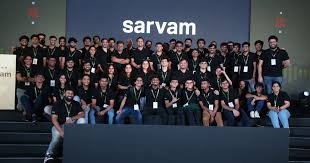
Crucially, the government is promoting AI with a focus on inclusion and ethics. The national AI strategy motto is “AI for All,” aiming to ensure the technology benefits every segment of society. India’s approach includes developing home-grown AI solutions for local challenges. For instance, a Bengaluru-based startup Sarvam AI is working with the Unique Identification Authority of India (UIDAI) to build a sovereign large language model (LLM) for Aadhaar services, improving the security and intelligence of India’s digital ID system. Another indigenous milestone is BharatGen AI, launched in mid-2025 as the first government-funded multilingual AI model that can handle text, speech, and images in 22 Indian languages. BharatGen was built using Indian datasets and is intended as a base for domestic startups and researchers to build AI applications tailored to Indian needs.
In summary, across sectors – from healthcare and farming to banking, manufacturing, education, and public services – AI adoption in India is on a strong upward trajectory. Enterprises are increasingly embedding AI in their core operations, startups are innovating with India-specific solutions, and government programmes are steering AI towards inclusive development. India’s overall AI adoption still trails leading global markets in maturity, but sustained growth in use cases and supportive policy indicate a rapidly evolving landscape.
Talent Gap: AI Skills Pipeline and Education
As AI permeates the economy, India faces a significant talent gap in terms of skilled AI professionals. While India has one of the world’s largest pools of tech manpower, the supply of AI specialists has struggled to keep up with surging demand. In 2024, it was estimated that India had about 420,000 AI professionals (4.2 lakh), but the immediate industry requirement was for roughly 600,000 – indicating a talent shortfall close to 50%. A joint report by NASSCOM and Deloitte (2024) projected that AI talent demand in India will grow from around 600–650 thousand in 2022 to over 1.25 million by 2027, driven by 25–30% annual growth in the AI market. This doubling of demand in five years raises concerns of a widening demand-supply gap, unless India rapidly upskills its workforce.
Paradoxically, India ranks among the top countries globally for AI skill penetration and developer talent. The Stanford AI Index 2023 placed India among the top 4 nations in AI skills and highlighted that India is the second-largest contributor to AI projects on GitHub, reflecting the strength of its developer community. Moreover, Coursera’s data shows India leading the world in the number of people enrolling in AI and machine learning courses online. Yet, skill quality and depth remain areas of concern. In Coursera’s 2025 Global Skills Report, India was ranked a lowly 89th out of 109 countries for overall skills proficiency in domains like data science and technology. In other words, millions of Indians are taking AI courses, but employers still find a dearth of industry-ready AI talent. A survey by Amazon Web Services underscored this issue: 96% of employers in India prioritise hiring AI-skilled talent, but nearly 79% struggle to find qualified candidates to fill those roles. Many engineering graduates are “degree-ready but not AI-ready” – they lack hands-on experience with AI tools and real-world problem-solving despite theoretical knowledge.
Several factors contribute to the talent gap. Regional concentration is one: AI expertise is heavily clustered in tech hubs like Bengaluru, Delhi-NCR, and Mumbai, leading to regional disparities. Bengaluru alone has become a global tech powerhouse with its tech talent pool crossing 1 million in 2024. The city attracted 140 VC tech deals (worth $3.3 billion) in 2024, including 34 deals in AI, reflecting its magnetic pull for AI startups and talent. Other metros like Delhi (which saw 42 AI-related VC deals in 2024) and Mumbai are also growing ecosystems, but many other regions lag behind. This concentration means companies in smaller cities or rural regions struggle to find experienced AI professionals, exacerbating the skills divide. To address this, the government has begun establishing AI labs and innovation centres beyond the big metros. For instance, under the IndiaAI Mission, 30 AI Data Labs were launched across various states by 2025 (including in several tier-2 cities), forming a network of 570 labs aimed at spreading AI R&D and training opportunities nationwide. Likewise, National Centres of Excellence for AI have been announced in sectors like agriculture, healthcare, smart cities, and education – some of which are being located in collaboration with state governments and local universities. These measures seek to broaden the geographic base of AI talent development.
On the education and training infrastructure front, India has ramped up efforts significantly in recent years. Academia is expanding AI-related offerings: the Indian Institutes of Information Technology (IIITs) and many universities now offer specialised B.Tech/M.Tech programmes in AI and data science. The government is actively pushing AI skilling via initiatives like FutureSkills PRIME, a public-private partnership between the Ministry of Electronics and IT (MeitY) and NASSCOM. This programme provides online courses and certifications in 10 emerging technologies including AI. As of August 2025, over 1.856 million (18.56 lakh) learners had registered on the FutureSkills PRIME portal and about 337,000 candidates completed courses, many of them in AI-related domains. Likewise, more than 865,000 people had enrolled in various emerging tech training (AI, big data, etc.) under other government skilling schemes by mid-2025. These figures indicate a massive upskilling movement underway. Additionally, the IndiaAI Mission’s FutureSkills pillar is supporting formal higher education – funding 500 AI-focused PhD fellowships, 5,000 postgraduate scholarships, and 8,000 undergraduate scholarships to build an academic pipeline of AI researchers and practitioners. By July 2025, over 200 students had already received PhD fellowships in AI and 26 institutes had onboarded doctoral candidates under this scheme.
Industry-academia partnerships are also being encouraged to ensure training aligns with practical needs. Tech companies in India have been collaborating with universities to set up AI research labs, sponsor contests, and contribute to curriculum design. For example, IBM partnered with the Gujarat government to establish an AI research cluster in GIFT City providing access to its AI platform for college students. Many corporations (TCS, Infosys, Wipro, etc.) run in-house training academies for fresh recruits to learn AI skills, and some open these programmes to external participants or partner with engineering colleges to nurture talent. The NASSCOM-Deloitte report (2024) emphasised that India must move from an IT services skill model to fostering AI product development skills, recommending closer collaboration to integrate AI coursework into all engineering and science programmes. The report also calls for comprehensive skilling pathways – from foundational AI literacy for all students to advanced specialisations – including practical projects, hackathons, and internships to give real-world exposure. The importance of such collaboration was echoed by industry leaders, with NASSCOM’s strategy head noting that integrating AI education into academic curricula and defining essential skill sets via industry input is critical for a future-ready workforce.
Another aspect of the talent pipeline is inclusivity and diversity. Currently, women are underrepresented in India’s AI workforce. Women make up only ~30% of GenAI learners in India (on Coursera), compared to 40% globally. Efforts are underway to encourage more women in tech through scholarships and mentorship programmes. There’s also focus on bringing non-engineers into AI – recognizing that AI solutions require interdisciplinary skills (for example, AI in healthcare needs medical experts with AI training, AI in law needs legally trained analysts, etc.). The AI Competency Framework for Government is an initiative to train public sector officials in essential AI concepts so that policymakers and administrators can effectively deploy AI in their domains. This involves structured training modules aligned with global benchmarks, ensuring bureaucrats and government project leaders understand AI’s capabilities and risks.
In summary, India’s AI talent gap is a challenge of scale and quality – there is a huge interest and baseline pool, but a need for deeper expertise and wider distribution. The country is responding through a multipronged approach: integrating AI education at all levels (school to PhD), massive online upskilling programmes, special initiatives to train government and industry professionals, and collaborations to align skills with market needs. With these efforts, India’s AI talent base – estimated at 600,000+ in 2022 – is expected to double to over 1.25 million by 2027, growing ~15% annually. Bridging the remaining gap will depend on sustaining these training initiatives and ensuring quality outcomes, so that having the world’s largest youth population can translate into an AI-empowered workforce.
Workforce and Employment Impact
The rapid adoption of AI in India is reshaping the workforce, bringing both opportunities and challenges. Will AI lead to unemployment? This question often arises as automation accelerates. In reality, while AI and automation are expected to displace certain jobs, they will also create new roles and augment many existing ones. A global analysis suggests that by 2030, about 92 million jobs could be displaced by AI/automation, but 170 million new jobs might emerge – a net gain of 78 million jobs worldwide. India, with its large workforce, is likely to see a similar pattern of job churn: roles that involve routine, repetitive tasks are most at risk, whereas new roles demanding digital, analytical and AI-related skills are on the rise.
In the Indian context, sectors like manufacturing, BPO, and retail could witness job reductions in routine roles (e.g. assembly line workers replaced by robots, call-centre operators supplemented by AI chatbots, etc.). However, emerging roles are quickly taking their place. There is soaring demand for professionals such as data scientists, AI/ML engineers, data analysts, AI solution architects, and business intelligence specialists. NASSCOM reports that AI is driving strong demand for jobs in data annotation and curation, AI engineering, and analytics across industries. For example, an AI engineer might build machine learning models for a bank’s credit system; a data curator might prepare and label datasets needed to train an AI algorithm; and an analytics specialist could interpret AI outputs to guide business decisions. These roles barely existed a decade ago, and now are among the most sought-after positions in tech firms and even traditional companies.
To ensure the workforce can transition into these new roles, massive reskilling and upskilling initiatives are being implemented by both government and corporations. On the government side, programmes like FutureSkills PRIME (mentioned earlier) have already upskilled hundreds of thousands in AI basics and allied technologies. Another government measure is the expansion of the Digital India Skill Centres and Industrial Training Institutes (ITIs) to offer AI and robotics courses, even in smaller cities. As noted, over 18.5 lakh (1.85 million) people have signed up on the national upskilling portal, reflecting how workers themselves are recognising the need to learn new skills.
Private companies are equally proactive. Major IT services firms (TCS, Infosys, Wipro, etc.) have each trained tens of thousands of their employees in AI and automation tools, often through internal certification programmes. Many firms encourage a “citizen developer” approach – training non-programmer employees to use AI platforms or low-code tools, so that even roles in HR, marketing, or operations can leverage AI (for instance, using an AI tool to automate a reporting task). Corporate academies and partnerships with online learning providers (Coursera, Udacity, upGrad, etc.) are common, allowing employees to take courses in machine learning or data science with company sponsorship. Sectors facing high automation risk, like BPM (business process management), are actively reskilling employees for higher-value tasks – e.g. moving a routine invoice processing clerk to a new role managing an AI system that processes invoices, or interpreting the outputs of an AI for decision support. This way, AI augments the worker instead of simply replacing them.
Policymakers are also addressing potential displacement through labour and education policies. The National Education Policy 2020 and related skill missions explicitly acknowledge the need to prepare youth for an AI-driven economy, which is why coding and AI are introduced early in schools. For the existing workforce, the Ministry of Skill Development is looking at models to retrain workers in industries like textiles or agriculture where automation could cause shifts – for example, training farmers in using AI-based advisory apps or drone technologies as part of extension programmes.
A significant portion of India’s workforce is in the informal sector (~490 million informal workers). A 2025 NITI Aayog report titled “AI for Inclusive Societal Development” lays out a roadmap for empowering these informal workers with technology rather than replacing them. It envisions AI tools that can amplify human capabilities: voice-based interfaces to help illiterate workers access information, micro-learning platforms for gig workers to upskill on the go, and smart matchmaking platforms that connect workers with jobs/opportunities more efficiently. The report emphasises that frontier technologies (AI, IoT, blockchain, robotics) should be deployed to reduce drudgery and improve incomes in areas like farming, construction, and small retail. For instance, an AI-powered Digital ShramSetu platform is proposed to bring together gig workers, provide them micro-credentials, and use AI to link them to market opportunities, with safeguards for fair wages. The government’s stance, therefore, is that AI should be a tool for augmenting human labour and bridging gaps (skill, language, access) rather than a pure replacement. This is in line with the mantra that “technology must not replace human skills, it must amplify them”.
That said, transition pain is inevitable for certain segments. The IT services/BPO sector which employs millions in India is itself undergoing automation – many routine support and coding tasks are being automated by AI (like code generators or automated testing tools). Companies in this sector have responded with large-scale reskilling drives. For example, tech employees are being retrained in Generative AI tools so they can work alongside AI co-pilots for programming, rather than being displaced by them. The workforce “readiness” across sectors varies: highly regulated industries like banking have been cautious and focused on upskilling existing analysts to use AI, whereas sectors like e-commerce or digital media, with younger workforces, have more readily adopted AI-driven workflows. Organisations’ culture also matters – about 60% of Indian workers and 71% of Gen Z employees believe acquiring AI skills will enhance career prospects, showing a general positive attitude among employees to learn and adapt. However, some older or less tech-savvy workers may feel anxious; HR departments are increasingly involved in change management to smooth the adoption of AI in workplaces, emphasising that AI can remove mundane tasks and free employees for higher-level work.
On the policy front, the Indian government is closely observing the labour impacts of AI. While India has not seen widespread job losses attributable directly to AI yet (partly because overall economic growth is creating jobs), there are efforts to update curricula and vocational training to align with future needs. The Ministry of Labour and Employment in collaboration with tech companies is exploring apprenticeships in AI and data roles for graduates, ensuring fresh talent is aligned with industry demand. Social safety nets and continuous learning will be key as well – the concept of lifelong learning is being promoted so that mid-career professionals can periodically update their skills (with online courses, evening programmes, etc.).
In summary, employment in the age of AI in India is characterized by a shift in the skill profile of jobs rather than an absolute decline in jobs. AI is automating repetitive tasks in sectors like manufacturing, IT support, and banking operations, which may slow the growth of those entry-level roles. However, new opportunities are burgeoning in AI development, data analysis, and domain-specific tech integration. The net impact can be positive if India successfully reskills its workforce at scale. Current trends are encouraging: India’s AI talent base is growing ~15% annually, and enterprises are actively investing in employee training. Additionally, many jobs in India – especially in the informal sector – are not easily automatable in the near term (e.g. craftsmen, caregivers, most construction work), but they can be improved with AI assistance (for instance, an AI tool to help a village artisan market their products better). By focusing on human-AI collaboration, Indian policymakers and businesses aim to ensure that AI becomes a source of augmented productivity and new employment avenues. The coming years will require careful navigation – balancing efficiency gains with social considerations – but if the current reskilling momentum continues, India’s workforce can emerge more versatile and tech-enabled, ready to harness AI rather than be displaced by it.
Investment Landscape and AI Ecosystem Growth
India’s AI boom is not only evident in adoption and talent metrics, but also in a surge of investments and infrastructure development around AI. The investment landscape spans significant public sector funding, growing venture capital interest, international partnerships, and the rise of AI innovation hubs across the country.
Public Sector Funding and Initiatives: The Government of India has made AI a budgetary priority. In March 2024, the Union Cabinet approved the IndiaAI Mission with an outlay of approximately ₹10,371.9 crore (over $1.25 billion) for five years. This mission is a comprehensive effort to cement India’s leadership in AI by investing in key pillars: building world-class AI computing infrastructure (GPUs and cloud platforms), nurturing talent, supporting startups, creating curated datasets, and promoting AI research for societal good. Already, the mission has resulted in the deployment of 38,000 GPUs (graphic processing units) across India’s research institutions and data centres, far exceeding the initial target of 10,000 GPUs, and these are being made available at subsidised rates to democratise AI computing access. The government has also set up Centres of Excellence (CoEs) in AI – three CoEs were operational in 2024 focusing on Healthcare, Agriculture, and Sustainable Cities, with a fourth in Education announced in Budget 2025. Each CoE is a hub where academia, industry, and startups collaborate on R&D and solutions in that domain. Additionally, five National CoEs for Skilling have been established to train youth on industry-aligned AI competencies, feeding the talent pipeline.
Another major public initiative is the development of AI infrastructure and data resources. The IndiaAI Mission launched AIKosh, a national repository of datasets and pre-trained models. By mid-2025, AIKosh hosted over 3,000 datasets and 243 AI models across 20 sectors, available for developers and researchers to build upon. This is crucial in lowering the entry barrier for AI innovation (so that teams don’t have to reinvent basic components and can use Indian-specific data). The mission is also funding the creation of Indian language foundation models (discussed earlier with BharatGen AI) to ensure India has sovereign AI capabilities.
On the policy side, India is actively shaping a conducive environment for AI innovation. The government has signalled plans for an AI regulatory framework that balances innovation with ethics – focusing on issues like bias, transparency, and data privacy – although as of 2025, India has not implemented any heavy-handed AI regulations, preferring an enabling approach. Instead, programmes like the Safe and Trusted AI pillar of IndiaAI provide grants for research on AI safety, bias mitigation, and auditing of AI systems. Eight projects were funded in the first round, covering topics like machine unlearning and privacy-preserving machine learning, and an IndiaAI Safety Institute is being formed with partner institutions to lead R&D on AI ethics and safety.
Venture Capital and Private Investment: The private investment climate for AI in India has heated up markedly. In 2024, Indian AI startups raised record levels of funding, albeit still modest on a global scale. According to Venture Intelligence data, AI startups in India secured about $475 million in funding in 2024, which was a sharp increase (four times the amount in 2021). This trend accelerated into 2025 – in just the first seven months of 2025, Indian GenAI (generative AI) ventures raised $524 million, surpassing the total of the previous year and hitting a five-year high. This marks a watershed as investors double down on AI opportunities in the country. Figure 1 illustrates the rising trajectory of AI startup funding in recent years:
Most of this venture funding is flowing into enterprise-focused AI companies and platform startups. Notable deals in 2024–25 included investments in firms like Fractal Analytics (a unicorn analytics company), DeepTech startups such as AlphaICs (AI chips) and industry-specific AI platforms like AtomicWork and TrueFoundry. Many of India’s top VC firms have pivoted to focus on AI – for example, Elevation Capital reportedly made 15–20 AI investments in the last two years, up from just a handful previously. Even global investors have increased their exposure to Indian AI startups, attracted by the large market and talent base. By mid-2025, the deal flow momentum was so strong that investors described seeing “green shoots” of a new cohort of globally competitive AI companies emerging from India. Key areas drawing interest include enterprise automation solutions, generative AI applications for businesses, vertical AI platforms, voice and language AI, and agentic AI (AI agents that can act autonomously). For instance, a number of startups are building vertical AI solutions – AI products tailored to specific industries or functions. An Upekkha Accelerator report noted that vertical AI (like AI for finance, health, manufacturing) will be a huge global market by 2030, and Indian startups have an edge in developing cost-effective solutions here. Examples include Signzy (BFSI-focused AI for digital onboarding), Prudent AI (AI for mortgage processing), Dozee (AI in healthcare monitoring), and Uptime AI (AI for industrial operations), all of which are Indian startups making waves in their respective verticals.
In comparison to global trends, India’s AI startup funding is still only around 1–2% of the world’s total (for perspective, global generative AI startups raised $49.2 billion in just the first half of 2025). However, the rapid growth in India is notable and is starting to produce success stories that attract international attention. Moreover, large Indian conglomerates are entering the fray – for example, Reliance Industries in late 2023 announced a multi-billion dollar investment to develop AI infrastructure and applications (including a partnership to build AI supercomputing capabilities in India). These big players bring not just capital but also large domestic datasets and distribution, which can accelerate AI deployment across retail, telecom, finance and other verticals.
International Collaboration and Hubs: India’s AI ecosystem is also benefitting from international partnerships and the emergence of regional tech hubs. Cities like Bengaluru, Delhi NCR, and Mumbai have solidified themselves as AI hubs, with Bengaluru earning a spot among the top 12 global tech “powerhouse” cities as per CBRE’s Tech Talent Guidebook 2025. Bengaluru’s thriving startup scene (28 unicorns as of 2023) and its talent pool (growing 12% annually) make it a magnet; it also houses over 500 Global Capability Centres focused on AI/tech R&D. Delhi-NCR and Mumbai are not far behind in terms of startup funding – for instance, in 2024, Delhi-NCR actually saw more AI-related startup deals (42 deals) than Bengaluru did, though with a smaller total funding amount of ~$1.9 billion across tech sectors. Mumbai likewise had a bumper funding year in 2024 with $4.9 billion across 167 deals (tech and startups broadly), reflecting its rise as a financial AI hub. These metros collectively form the core of India’s AI innovation. They are supported by strong educational institutions, incubators, and presence of global tech firms. Encouragingly, second-tier cities are also joining the AI map: Hyderabad, Pune, Chennai have significant IT industries and are seeing more AI startups and AI research centres. Emerging cities like Ahmedabad (leveraging GIFT City for fintech and AI) and Jaipur (with its talent from local engineering colleges and lower operating costs) are attracting startups and IT operations, contributing to a more distributed innovation landscape.
International collaboration is further fueling the ecosystem. Under the IndiaAI Startups Global Acceleration Program, the Indian government in 2025 partnered with Station F (Paris) and French institutions to help 10 selected Indian AI startups expand into Europe. This kind of initiative provides global exposure and networks for Indian startups. India is also actively engaging in bilateral cooperation on AI. For example, India and the US launched an iCET (Initiative on Critical and Emerging Technologies) in 2023, which includes AI cooperation. With the UK, India has an MoU on AI in healthcare (as noted, ICMR and NHS/UK researchers collaborating on medical AI). Similarly, ties with Singapore have involved sharing best practices on AI governance in healthcare. Indian IT services companies are partnering with foreign AI firms to bring advanced solutions into the country. Meanwhile, global tech giants (Google, Microsoft, NVIDIA, etc.) have been investing in India’s AI ecosystem – for instance, NVIDIA is working with Reliance and Tata Group to set up AI compute infrastructure and cloud AI platforms in India (announced in 2023), and OpenAI has indicated plans to open offices or partnerships in India to tap into talent and market needs.
The infrastructure side is equally crucial to support AI growth. Cloud service providers (AWS, Azure, Google Cloud) have all expanded their data centre regions in India in the last couple of years, adding capacity to handle the rising AI computational loads. The allocation of 38,000 high-end GPUs under the IndiaAI Mission means researchers and startups can access top-tier computing at subsidised rates of about ₹65 per hour, which is a significant enabler (as training AI models is computationally intensive and expensive otherwise). Additionally, India is exploring building indigenous semiconductor and chip design capabilities for AI – a nascent effort but with strong strategic backing given the geopolitics of chip supply.
Across central and state governments, there is a push to cultivate local AI innovation ecosystems. Many state governments launched their own AI policies in 2024 to complement the national strategy. For example, Tamil Nadu rolled out the Tamil Nadu AI Mission (TNAIM) focusing on “AI for social good” with an initial investment and partnerships through its e-Governance Agency. Karnataka (home of Bengaluru) released a policy targeting 500 new Global Capability Centres and introduced AI-based education pilots like the Shiksha Co-Pilot for schools. Telangana set up the Telangana AI Mission earlier, and in 2024 it continued to strengthen its AI innovation hub in Hyderabad with a focus on e-governance and mobility solutions. Maharashtra signed a MoU with Google to deploy AI in agriculture, healthcare and education and is establishing a Centre of Excellence in AI, IoT, and robotics in collaboration with NIELIT to skill manpower in these areas. Even smaller states like Kerala and Odisha have held AI summits and are investing in startups tackling local issues (like fisheries, disaster management etc. using AI). This proliferation of state-level initiatives signals broad-based commitment across India to foster AI development in alignment with local needs.
Finally, it’s worth noting the importance of compute and cloud infrastructure growth. Apart from GPUs, India’s supercomputer programme (PARAM series, etc.) is being leveraged for AI research. The country is also considering joining or forming international partnerships for AI research funding – analogous to how it participates in global science projects – which could bring more funding into Indian AI labs.
Investment and ecosystem outlook for AI in India in 2025 and coming 2026 is seems to be robust and accelerating. Government funding has laid a strong foundation (with multi-crore programs for infrastructure and talent), and private capital is increasingly flowing to AI ventures, especially those targeting enterprise and sector-specific solutions. Indian cities are evolving into vibrant AI hubs, while global collaborations provide additional boost in expertise and market access. Challenges remain – Indian startups still raise far less capital than US or Chinese counterparts, and overall R&D investment in AI (public + private) as a percentage of GDP is still relatively low. However, the trajectory is clearly upward. With continued strategic investments and a focus on building an inclusive innovation ecosystem, India is positioning itself as an AI powerhouse of the Global South, leveraging its demographic advantage and IT legacy. The coming years up to 2030 will be critical in determining how quickly India can close the gap with global AI leaders, but the developments in 2024–2025 suggest that the foundation for an AI-driven economy is firmly being laid in the country.
Disclaimer:
This report is intended for informational and analytical purposes only. While every effort has been made to ensure the accuracy of the data and insights presented, the authors do not accept any liability for errors, omissions, or outcomes resulting from the use of this report. All statistics and projections are based on publicly available sources and current market trends as of 2025. The views expressed are those of the authors and do not necessarily reflect the official policy or position of any government or institution.