

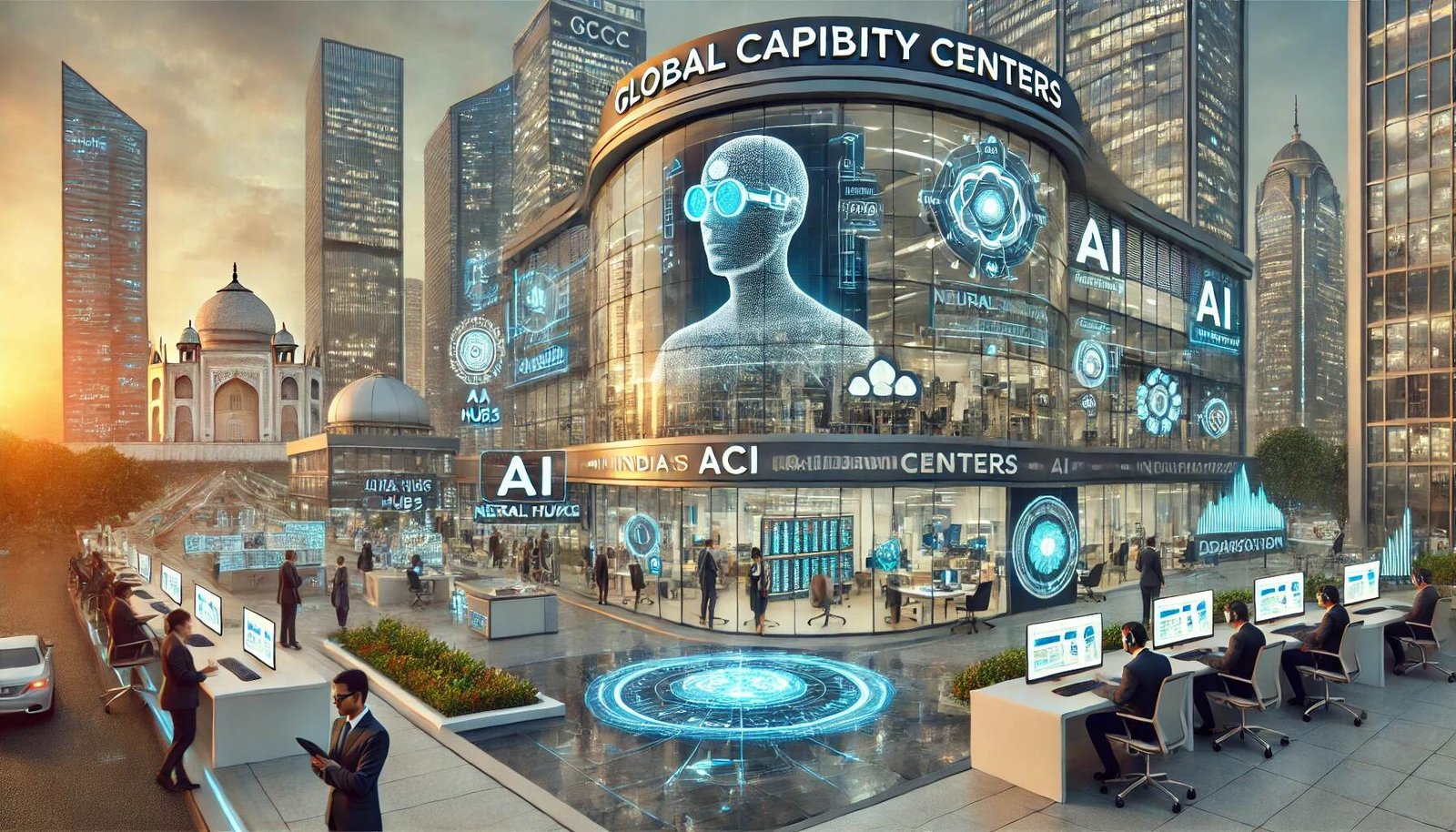
India’s Global Capability Centre (GCC) ecosystem is undergoing a rapid evolution, driven by twin forces: a surge in private equity-backed GCCs and accelerated AI adoption. Once primarily the domain of Fortune 500 companies, GCCs in India now span a wider range of enterprises and are taking on far more strategic roles. There are now over 610 mid-market and PE-backed companies operating GCCs in India – a number projected to cross 950 by 2030. At the same time, Indian GCCs are moving decisively from experimental AI pilots to enterprise-wide AI deployment, with 58% of GCCs investing in advanced “Agentic AI” and another 29% poised to scale AI initiatives within the next year. These trends signal a structural shift in what GCCs do and who is driving their growth, reshaping them from back-office support centers into innovation hubs at the heart of global operations.
Private Equity: Powering a New Wave of GCC Expansion
Private equity (PE) investors have emerged as key catalysts in the next wave of GCC growth in India. As of September 2025, more than 610 emerging and PE-backed enterprises had established GCCs in the country. Notably, 64% of all new GCCs in the mid-market segment since 2020 have been launched by PE-backed firms. This marks a significant shift – the GCC model is no longer confined to corporate giants, but is being embraced by mid-sized and high-growth companies often backed by venture capital and private equity funding.
This influx of PE-backed GCCs reflects how mid-market firms are leveraging India’s talent ecosystem for competitive advantage. According to industry data, roughly one in three GCCs opened in India in recent years was by a PE-funded company. Consulting firm Zinnov notes that among ~200 new GCCs set up in the last four years, mid-market firms accounted for 59% – and within that, about 65% were PE-backed. In other words, private equity portfolio companies have been aggressively expanding into India via GCCs, making this “a new growth segment within GCCs”. Major PE players like KKR, Blackstone, Warburg Pincus and others are actively encouraging their portfolio companies to open India centers, seeing GCCs as strategic assets rather than mere cost-saving outposts.
Why are PE-backed firms drawn to the GCC model? Speed and value creation. These mid-sized enterprises are often scaling rapidly, and they set up GCCs with “urgency and clarity of purpose,” as Vikram Ahuja, co-founder of ANSR, observes. With compressed investment timelines and the need to boost value quickly, PE-backed GCCs are “designed from day one to deliver outcomes, whether it's accelerating product development, enhancing EBITDA, or driving platform transformation,” Ahuja explains. Unlike traditional captive centers that might focus on routine IT or support tasks, these new GCCs are “not auxiliary operations” but rather “value creation engines” for their parent firms. They plug directly into global decision-making and innovation cycles, delivering measurable business outcomes across the PE portfolio.
Prominent examples span sectors like software-as-a-service (SaaS), cloud computing, cybersecurity, and financial services – all areas where specialized talent in India can drive product and tech development. For instance, Blackstone-backed Lumina CloudInfra, Thoma Bravo’s portfolio company ABC Fitness, and Warburg Pincus-backed firms are among those that recently established GCCs in India. The mid-market segment now makes up over a third of all GCCs in the country, signaling that India’s GCC ecosystem has become size-agnostic. Even companies with as little as $50–$100 million in revenue are setting up India centers to accelerate growth. As one ANSR report put it, “the GCC model has evolved – it’s no longer the exclusive domain of Fortune 100 companies”, and mid-size firms can leverage GCCs to scale quickly, experiment freely, and see tangible outcomes sooner.
From Back Office to Innovation Hub: AI’s Transformative Impact
Concurrently, artificial intelligence (AI) is reshaping what work gets done in GCCs and how they operate. India’s GCCs are “undergoing a structural reset as AI shifts centers from back-office engines to product-led, governance-driven innovation hubs”, according to a recent NLB Services report. In practice, this means GCCs are no longer content handling low-value, routine tasks – they are now leading core R&D, product development, and digital transformation projects for their global companies, heavily enabled by AI capabilities.
Critically, the pace of AI adoption in GCCs has accelerated. The EY GCC Pulse Survey 2025 finds that 58% of Indian GCCs have moved beyond AI experimentation and are investing in “Agentic AI” for enterprise-scale deployment, while another 29% are preparing to scale AI initiatives in the next 12 months. In effect, nearly 87% of GCCs are at or nearing large-scale AI implementation, a remarkable leap from just a couple of years ago. The survey notes a “rapid transition from experimentation to enterprise-scale AI,” calling Agentic AI the “next frontier” of intelligent automation in these centers.
What does this mean on the ground? For one, GCCs are rolling out generative AI (GenAI) and automation use cases across key business functions. 83% of GCCs are already investing in GenAI in some form, often after initial pilots proved value. Top focus areas include customer service (deployed in 65% of GCCs using GenAI), finance and accounting (53%), operations (49%), and IT/security (45%) – domains where AI can quickly automate workflows or augment human decision-making. For example, many GCCs have implemented AI chatbots for customer support, predictive analytics in finance, AI-driven process automation in operations, and machine learning models for cybersecurity threat detection. These AI applications underscore that GCCs are no longer just support arms; they are developing and deploying cutting-edge solutions that directly impact the business.
Moreover, GCCs are building the internal structures to innovate continuously with AI. Nearly two-thirds (67%) of GCCs have created dedicated innovation teams or incubation hubs to drive new ideas. Many have also ramped up upskilling programs – 81% of GCCs are training their employees on GenAI skills to ensure the workforce can build and work alongside AI. The result is a virtuous cycle: as GCC teams become more AI-proficient, they take on more complex projects and even help globalize innovation out of India through structured idea pipelines.
Another striking change is the expansion of decision-making and ownership roles in India’s GCCs. Traditionally, strategic decisions stayed at headquarters while India centers executed. That is no longer the case. Today, over half of GCCs (52%) in India hold shared accountability for global decisions, and another 26% are regularly consulted on global strategy. In fact, 20% of GCCs report moving toward full ownership of select global functions. This means Indian GCC leaders are now co-owners of products and platforms, not just followers of instructions. They lead global product portfolios, govern critical tech platforms, and sometimes even own end-to-end delivery of entire business functions. Little wonder that EY India’s GCC sector leader noted “a structural shift” – global firms are realizing that the combination of talent, digital maturity, and an advancing AI ecosystem in India offers something they can’t easily replicate elsewhere. In effect, many companies now view their India GCC as an innovation arbitrage play, harnessing top-notch talent and AI capabilities in India to deliver leaps in productivity and new solutions.
Crucially, GCC operating models are being reinvented in this AI era. In the past, cost arbitrage was king – success was measured in savings. Now, 92% of GCCs say they aim to deliver value beyond cost arbitrage. 87% plan to manage entire end-to-end global processes (not just small pieces) from India, indicating a desire to own larger chunks of the value chain. Many centers remain mostly in-house (84% of GCCs keep work internal vs. 12% outsourcing) to retain control and build proprietary expertise. And priorities have shifted: GCCs are channeling the biggest share of their budgets into technology and transformation (25% of budgets) and talent development (23%), rather than just infrastructure or basic training. All this underscores that Indian GCCs are striving to be centers of excellence that drive transformation, not just low-cost satellites.
Geographically, the GCC boom continues to center on India’s established tech hubs, but there are signs of dispersion. Bengaluru remains the single largest GCC hub, hosting roughly one-third of all mid-market GCCs and a substantial share of large GCCs as well. Surveys indicate anywhere from 34% to nearly half of GCCs are in Bengaluru depending on the sample. Delhi-NCR (around 15%), Pune, and Hyderabad follow as other major destinations. However, tier-2 cities are rising on the GCC map. Non-metro locations like Ahmedabad, Jaipur, Kochi, Coimbatore and Bhubaneswar already account for ~14% of mid-market GCCs and are expected to expand their share steadily. The EY survey similarly noted growing activity in tier-2 hubs alongside the big three cities. This trend suggests that companies are willing to tap talent beyond the traditional metros, especially as remote/hybrid work models gain acceptance and local infrastructure improves. It’s increasingly common for a multinational to have its main India center in a metro (say Bangalore) but also operate smaller centers in lower-cost cities for specific talent or business needs.
Workforce Growth, New Roles, and Talent Challenges in the AI Era
The convergence of PE-led growth and AI adoption is leading to remarkable workforce expansion in the GCC sector. As GCCs go “AI-first” and broaden their mandates, they are hiring aggressively. A recent study by NLB Services projects an 11% expansion in GCC jobs in the next year, bringing the total GCC workforce in India to about 2.4 million by 2026. And this is just the beginning – by 2030, India’s GCC workforce is expected to reach roughly 3.46 million, up from around 2 million mid-decade. That implies an addition of approximately 1.3 million new GCC jobs by 2030 driven by AI-led growth. In other words, AI is not seen as replacing jobs in the GCC context; it’s a net creator of new opportunities as centers take on more advanced work.
What kinds of jobs are being created? Primarily, AI-native and digital roles that barely existed a few years ago. GCCs are now recruiting for positions like “cybersecurity and AI governance architects,” “prompt engineers” for generative AI, “GenAI product owners,” and “AI policy and risk strategists.” These roles – focused on building and governing AI systems – are rapidly gaining prominence. According to the NLB study, 29% of GCCs report demand for AI governance architects, 26% for prompt engineers, 22% for GenAI product owners, and 21% for AI risk strategists as they embed AI deeper into operations. This signals a pivot in skill sets: beyond traditional software and business domains, GCC teams now need expertise in data science, machine learning, AI ethics, and AI toolchains. Many GCCs are creating multidisciplinary “fusion teams” that blend domain experts with data and AI specialists to drive automation in their respective fields.
Conversely, some legacy roles are fading as automation takes over routine work. The NLB report notes that low-level IT support (L1 support), legacy application maintenance, manual QA/testing, and on-premise infrastructure management are steadily declining across GCCs. In fact, 75% of centers surveyed are reducing L1 support roles, 74% reducing legacy app dev roles, 72% cutting manual QA, and 67% moving away from on-prem infrastructure management. These tasks are increasingly handled by AI-driven tools (e.g. AI chatbots for basic support, automated testing platforms, cloud services instead of on-prem data centers). The upshot is a workforce shift: fewer people doing repetitive support tasks, more people in higher-value roles like AI solution engineering, product development, and advanced analytics. GCCs are essentially redesigning their workforce architecture to stay competitive in an AI-enabled environment.
This transformation comes with its set of challenges, particularly around talent. As demand soars for AI and digital skills, a talent war is brewing. “With the growth of GCCs and new-age technologies like AI, ML and data analytics, there will be some sort of a war for talent… it will intensify,” warns Varun Sachdeva, Senior VP at NLB Services. India is building a large pool of tech talent – it currently has around 600,000 AI professionals, projected to double to 1.25 million by 2027 (which would be ~16% of the global AI talent base). Yet, the demand may outpace supply in the short term, especially for experienced AI leaders and niche experts. GCCs are already feeling skill gaps in leadership pipelines and core operations in an AI-centric context. In some surveys, attrition in digital roles remains high (over 25%) and wage inflation in AI skills is running around 20–25%, reflecting the competition for experienced talent.
To cope, companies are doubling down on upskilling and internal talent development. Many GCCs have set up in-house “universities” or learning academies, expanded partnerships with educational institutions, and rolled out continuous reskilling programs. In fact, 71% of GCCs cite workforce reskilling as a top priority and are actively re-training employees for new roles. Some are establishing AI Centers of Excellence and internal certification programs to cultivate AI expertise organically. These efforts not only fill skill gaps but also help with retention, by giving employees clear career paths in emerging tech areas. Additionally, as 39% of GCC talent may be based in tier-2/3 cities by 2030, companies are expanding their hiring footprint beyond the expensive metro hubs, tapping into untapped pools of engineers in smaller cities. This distributed workforce model can alleviate some talent crunch pressure while also lowering costs. The decentralization is already underway: nearly 0.7 million net new GCC jobs are expected to be created in tier-2/3 locations by 2030 as firms diversify their location strategy.
A New Era for GCCs in India
Private equity involvement and AI adoption are together reshaping India’s GCCs at an unprecedented pace. PE-backed firms have injected new energy and ambition into the sector – broadening the base of GCCs beyond large multinationals and infusing a mindset focused on agility, product innovation, and fast returns. At the same time, AI technologies are transforming GCCs from cost-focused support centers into strategic innovation engines** for their global enterprises. Indian GCC teams today are building core products, pioneering AI solutions, and even steering global business decisions – a far cry from the call centers and back offices of two decades ago.
The numbers tell part of the story: hundreds of new GCCs launched, millions of jobs to be added, dozens of new roles created. But beyond the numbers is a qualitative change in the role of GCCs. They have become “strategic anchors of innovation, digital leadership, and global competitiveness,” as one industry report describes. In fact, India hosts roughly 1,700 GCCs overall employing close to 2 million professionals as of 2025, and many of these are now at the forefront of their companies’ digital transformation. Some experts even suggest that in an AI-first future, we might stop calling them “GCCs” – they’ll simply be seen as centers of gravity where the most critical work gets done and the next generation of global leaders is forged.
Of course, realizing this vision will require navigating challenges. Scaling up India’s talent pipeline in advanced technologies is crucial to sustain growth; industry leaders are already collaborating with academia and government on this front. Governance and responsible AI practices will also need attention as GCCs deploy AI at scale – ensuring that innovation is balanced with ethics and compliance. Lastly, maintaining the quality of infrastructure and business environment (from office space to data security to regulatory support) across both metros and smaller cities will determine how smoothly this expansion continues.
Nonetheless, the trajectory is clear. India’s GCC ecosystem is expanding and maturing in ways few imagined a decade ago, fueled by private capital on one side and technological leaps on the other. As global companies seek to build resilience and innovation capability, India’s GCCs – armed with world-class talent and AI-driven productivity – are set to play an ever more pivotal role. In this new era, a GCC in India is not just a support unit; it is increasingly a core strategic asset – where products are built, intellectual property is developed, and the future of the enterprise is imagined. The coming years will test how well India can keep pace with the demand for skilled talent and robust governance, but if it rises to the challenge, the country is poised to remain the epicenter of global enterprise innovation in the AI age.